
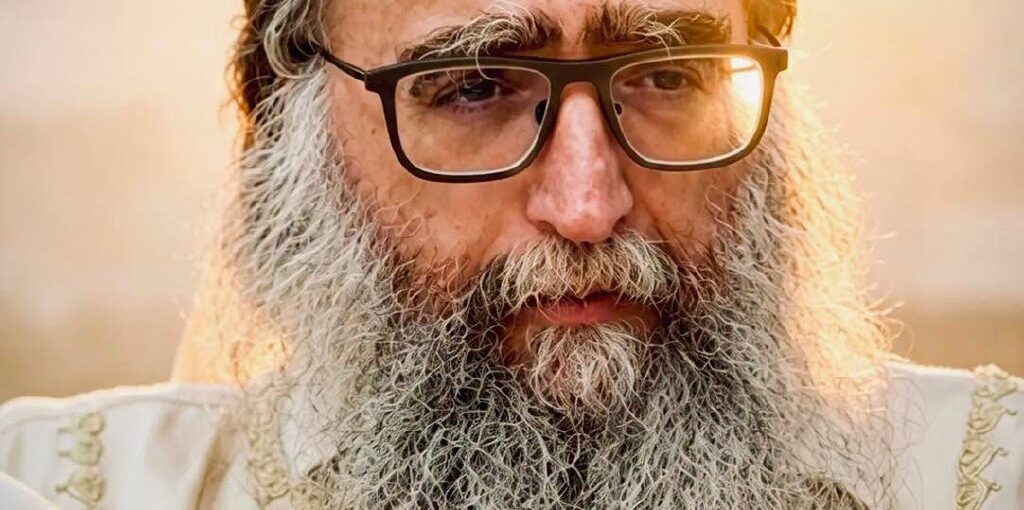
“Take words with you and return to the Lord.” — With these words, Rabbi Yoshiyahu Yosef Pinto, shlit’a, opened his most recent shiur, delivered before Yom Kippur in the Holy Land, before a congregation of thousands who had gathered to prepare their hearts for the great and awesome day.
Thank G-d, we have passed another year — a year of holiness, a year of self-sacrifice, a year of mitzvot, a year of immense love for G-d. And now, standing on the eve of Yom Kippur, the Rabbi asked the congregation to pause and consider the deepest question of the day: What is the true work of Yom Kippur, and what is it meant to accomplish within us?
The answer, he taught, lies in the Seder HaAvodah — the Order of the Service — recited in the Musaf prayer, which recounts and re-enacts what the Kohen Gadol (High Priest) did in the Holy Temple on Yom Kippur. To understand Yom Kippur is to understand that service. And to understand that service is to understand the journey of the soul.
The Day the Second Tablets Were Given
The Rabbi took the congregation back to the beginning. Yom Kippur is the day of atonement for the sin of the Golden Calf. After the Children of Israel sinned so severely — taking the calf and declaring, “These are your gods, O Israel, who brought you up out of Egypt” — the Holy One, blessed be He, was angered and sought to blot out the people. But Moses our Teacher pleaded before Him, asking for forgiveness and atonement.
The Holy One, blessed be He, granted Israel a chance to be pardoned. Moses ascended to heaven on the first of Elul and remained there forty days and forty nights, begging for mercy. The Tur, citing Pirkei DeRabbi Eliezer, teaches that every day of those forty days — from the first of Elul until the tenth of Tishrei — the shofar was sounded, hearts were prepared, repentance was performed, and forgiveness was sought from the Holy One, blessed be He.
On the fortieth day — the tenth of Tishrei, Yom Kippur — Moses descended with the second tablets, the Tablets of the Covenant, the Torah itself. On that day, as the verse declares, “for on this day He shall atone for you to purify you from all your sins.”
If so, the giving of the Torah — the second tablets — took place on Yom Kippur. Yom Kippur is a day of atonement, of pardon, of forgiveness, of the expiation of sins. It is not merely a fast; it is a day of receiving.
The Work of the Kohen Gadol: Ten Washings and Five Immersions
The main part of the day is the service — and who performed it? Aaron the Priest, the Kohen Gadol. The Sages teach that on Yom Kippur the High Priest washed his hands and feet ten times and immersed in the mikvah five times.
The order was precise. He had golden garments and linen garments. Dressed in the eight golden garments, he served outside the Holy of Holies. But when he entered the innermost sanctum — the Holy of Holies — he wore only the white linen garments, as the Torah commands.
The Gemara records a dispute between Rabbi Meir and Rabbi Judah as to exactly when the first washing took place — whether before removing the garments or after. In practice, the sequence was: he donned the golden garments and washed his hands and feet; he removed them and put on the linen garments; he entered the Holy of Holies for the incense and the inner service; he emerged, washed again; he put on the golden garments and continued the day’s work; and so on — until he had immersed five times in the mikvah and washed his hands and feet ten times, completing the service of the day.
The Rabbi then asked the question that the congregation had come to hear: Why? Why the immersions? Why the washings? Why specifically ten times, and why five?
Yud-Heh: The Seal of the Sacred
One must know, the Rabbi explained, that everything that exists on Yom Kippur is a sealing — the most sacred of things. Yom Kippur is a great day, a holy day, an awesome day, whose power cannot be estimated or described. There is even a dispute in the Gemara whether one must repent, or whether the essence of the day itself atones for a person’s sins. Such is its loftiness.
The ten washings of the hands and feet, taught the Rabbi, correspond to the letter Yud. The five immersions in the mikvah correspond to the letter Heh. Together they form Yud-Heh — the opening of the Holy Names of the Holy One, blessed be He.
This is the hidden dimension of the Seder HaAvodah: every washing, every immersion, is a letter of the Divine Name being drawn into the world. When we recite “and we will render the offering of our lips,” what we say with our lips is considered as though we ourselves had performed the service — as though the Kohen Gadol had performed the work of Yom Kippur.
Gold Is Red: The Purification of Physicality
What are the golden garments the High Priest wore outside? The Sages call gold a red color. And what does red symbolize? All the daily tasks, the physicality, the blood, the eating, the drinking — all the things of daily life. Blood is the eating and drinking, the pleasures of a person. That is the red.
When the Kohen Gadol immersed his hands and feet ten times while wearing the garments that contain gold — red gold — he was purifying the physicality of a person. As the verse promises, “If your sins are like scarlet, they shall become white as snow.” The washing of the hands and feet purifies the body and the material life.
Here the Rabbi turned to the congregation with words of great practical weight. We are entering Yom Kippur — but what of all the physicality we engaged in throughout the year? The unnecessary eating, the unnecessary sleeping, the unnecessary talking, the things we truly did not need. He taught that a person truly needs to live on only twenty percent of what they eat; the other eighty percent is mere desire for things a person does not need. That is what must be purified and sanctified.
The Mikvah: Returning to the Root
And what is a mikvah? A mikvah, taught the Rabbi, is returning to the root — returning to the mother’s womb, returning to the most sacred place. It is the soul’s homecoming to the source from which it was hewn.
White garments, by contrast, are garments of simplicity. There is no agenda in them, nothing excessive. After the Kohen purifies the gold, the red, all the physicality a person carried through the entire year — after he washes and performs the external service of the Temple — then he immerses in the mikvah, sanctifying himself, returning to the root of his essence, to the root of his soul. And afterwards, he puts on white garments: simple garments without any pursuit of the desires of this world.
What is the entire service of Yom Kippur? To return us to the root. The people of Israel are holy; the people of Israel are pure; their root is holy and pure.
Head and Not Tail: The Battle Against Materialism
The Rabbi then spoke of the great tension of our generation. We say on Rosh Hashanah, “May it be Your will that we be the head and not the tail.” But if we are the head, surely we will not be the tail — so what does the request mean?
There are people, he explained, who are both head and tail: they do Torah and mitzvot, and they also commit sins. Our prayer is that we be the head only — in Torah, in mitzvot, and in the service of G-d — and not the tail, not also sins.
Today there is Torah and there are mitzvot that did not exist in any other generation. Never have so many gathered for Selichot; never have so many tallitot been worn, so many righteous women covered their heads, observed the mikvah, and lit Shabbat candles; never have so many attended Torah classes. The prophet’s words are being fulfilled in this generation: “Behold, the days are coming, declares the Lord, when I will send a famine on the land — not a famine of bread, nor a thirst for water, but of hearing the words of the Lord.” People now prefer hearing words of Torah to eating and drinking.
But on the other hand, there is a great war of materialism. Desire pulls a person toward things that did not exist in previous generations. There is Torah, there are commandments, there is kindness and charity and Torah classes — but people are also drawn into materialism in a very difficult way. There is a head, and there is also a tail.
The service of Yom Kippur — the ten washings against the red, against materialism, against lust, and the five immersions returning us to the root, and the white garments without gold — is the remedy. It is how we detach from the material and connect to the spirit.
The Menorah That Taught Attachment
To make this real, the Rabbi told a story. There was a great righteous man who possessed something valuable. It was stolen from him. Instead of replacing it with another expensive item, he went and bought a very simple menorah.
They asked him: “Why? You could have bought an expensive menorah again?”
He answered: “Because it pained me over the expensive menorah — and that is a sign that I had become too attached to it. The more I become attached to the things of this world, the harder it will be for me to detach and ascend to the World to Come easily.”
The Rabbi drew the lesson outward: the more a person becomes attached to the desires of this world — even permissible desires like eating and drinking — the harder it is to detach from this world. A person should enjoy everything that is permitted, but should not become attached to it, and should remain in a true and correct state.
Stability of the Soul
From there the Rabbi addressed the inner life of the individual. Many people live with moods, anxieties, and confusion — up and down, happy and sad, close to G-d and then lost in the noise of the world. When a person lives it all mixed together, they have no stability in life. A person must work greatly on themselves to stabilize their soul. When the soul is steady, things become more comfortable and easier.
And it is the connection to truth, to the Holy One, blessed be He, to purity, honesty, and integrity that makes our soul healthier and stronger. The more attached we are to desires, the more fears and anxious thoughts we carry — “maybe we will lose it, maybe it will not remain with us.” But the more we are bound in true connection with the Holy One, blessed be He, the more our soul is truly alive.
A Blessing for the Whole Community
The shiur was also a moment of heartfelt blessing. The Rabbi blessed the masters of kindness, the dear brothers Gili and Dudi Avrahami, righteous men who are entirely kindness, mitzvot, and good deeds, always first in every matter of a commandment — and their righteous wives, Nurit and Meital, great righteous women. Recalling the Sages’ blessing — “Tree, O tree, with what shall I bless you? Your fruits are sweet, your shade is pleasant, and the stream of water flows beneath you” — he prayed that their children walk in their path of kindness, mitzvot, innocence, love of G-d, and faith in the sages.
Standing before the Holy One, blessed be He, with hearts broken and filled with awe — “Who shall live and who shall die?” — the Rabbi asked: “Master of the Universe, do You have another special community in the whole world like Shuv Yisrael? If You do not, then give us more blessing and abundance, because we will do for the will of G-d what no one else has done or will do.”
He blessed the righteous mother of Gili and Dudi, Leah bat Malka, and every single one of the righteous people gathered there — asking that the Holy One, blessed be He, open the gates of heaven and grant great success, blessing, joy, and good fortune, and that everyone’s heart’s desires be fulfilled for good and for blessing.
The takeaway for every one of us this Yom Kippur: The service of the Kohen Gadol is not distant history — it is the map of our own avodah. Ten washings and five immersions. The red of physicality exchanged for the white of simplicity. A mikvah that returns us to the root of our soul. A life of enjoyment without attachment, of Torah with stability, of a soul bound in truth to the Holy One, blessed be He.
As Rabbi Yoshiyahu Yosef Pinto, shlit’a, concluded: “We are confident that on this Yom Kippur we will all be sealed for a good life — in the book of the righteous and the pious.”
May we all be sealed in the Book of Life. Amen.
