
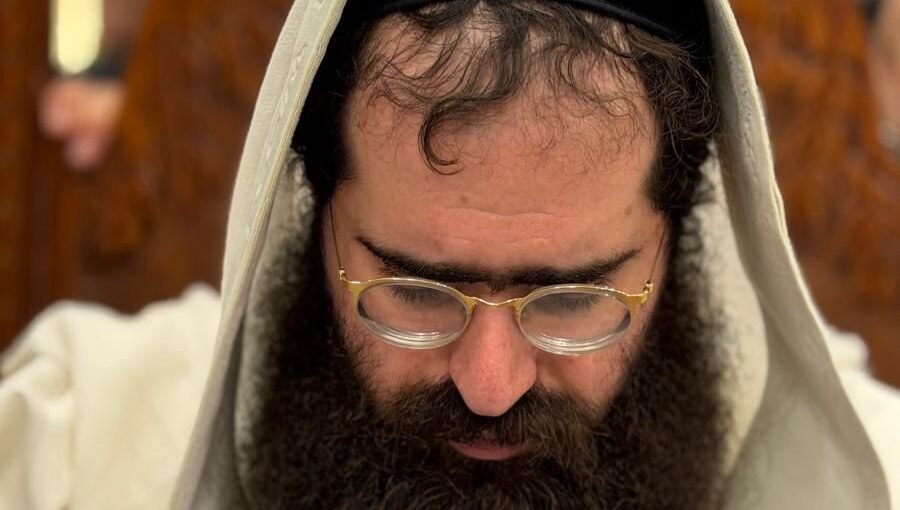
By: Rabbi Yoel Moshe Raphael Pinto, Shlita
As we enter the Book of Devarim (Deuteronomy)—traditionally referred to as Mishneh Torah—we begin a period of deep introspection. This book holds a unique status in the Pentateuch; it consists of the words spoken directly by Moses to the children of Israel before his passing. The sages teach us that this book carries a profound capability for shinui (change). It is not merely a repetition of the law, but a spiritual tool designed to help us alter our spiritual status, sweeten severe judgments, and transform our lives.
The Mapping of History in Devarim
The Vilna Gaon shared a striking tradition: the 6,000 years of the world’s existence are structurally encoded within the Torah. Specifically, the final millennium—the sixth millennium, in which we currently live—is mapped out across the ten portions of the Book of Devarim. Each portion corresponds to a 100-year cycle within this millennium.
For instance, the portion of Ki Teitzei directly aligns with the era of the Vilna Gaon himself and his disciple, Rabbi Chaim of Volozhin. The Gaon even identified his own name, Elijah ben Shlomo, hinted at in the verses of Ki Teitzei through the words Even Shlema (a perfect weight). This mapping highlights that the Torah is a living, breathing blue-print of human history.
Shabbat: The Unshakable Sanctuary
Following the destruction of the Holy Temple, the quality of our spiritual lives was drastically diminished. Our sages teach that the value and purity of almost every spiritual experience declined—with one notable exception: the Holy Shabbat.
Unlike other holy observances, Shabbat does not depend on human sanctification, the merits of the generation, or physical structures. It was sanctified by the Creator during the six days of Creation. Therefore, even in the depths of exile, the peace and elevation of Shabbat remain completely intact, offering us a weekly taste of redemption.
THE SPIRITUAL MATHEMATICS OF COMFORT

      Shabbat Chazon (Vision of Destruction)
      vs.
      Shabbat Nachamu (Sanctuary of Comfort)

      Gematria Difference: 32 = לֵב (Lev / Heart)

      Lesson: The transition from hardship to comfort
      unfolds entirely within the human heart.
Esau’s Merit and the Height of the Temple
One of the most challenging historical questions is how Rome—the descendants of Edom and Esau—merited the spiritual power to destroy the Holy Temple. The Ba’al HaTurim reveals a remarkable explanation based on the mitzvah of Kibbud Av va’Em (honoring parents).
Isaac was 60 years old when Esau was born. Despite his wicked ways, Esau honored his father with unmatched devotion, famously keeping his finest garments set aside solely to serve him. The first Temple stood at a height of 60 cubits. The sages explain that Edom gained the spiritual license to destroy this 60-cubit-high structure specifically through the merit of Esau honoring his father, who was born when Isaac was 60.
This teaching reveals the immense, long-lasting power of honoring parents. Even when performed by someone otherwise distant from righteousness, the fulfillment of this mitzvah creates an almost indestructible spiritual shield.
The Struggle of Kibbud Av va’Em
The Rabbi discusses why honoring parents can sometimes feel like a constant struggle within Jewish families, whereas other cultures may seem to find it simpler.
In many traditions, there is a passive acceptance of parental traits, both good and bad. However, a Jewish soul is bound to a lifetime of self-refinement and character correction (Tikkun HaMiddot). When a person actively works to identify and remove negative inherited traits within themselves, it naturally creates a complex internal friction with the parents from whom those traits were received. This struggle is not a sign of failure, but rather a reflection of the profound spiritual work of self-improvement.
The Root of Exile: Birkot HaTorah
The Talmud asks a fundamental question: Why was the land of Israel lost and destroyed? The prophets and sages searched for the answer, until the Creator Himself revealed it: “Because they abandoned My Torah.”
The sages clarify that the people were indeed actively studying Torah, but they did not recite the blessing over the Torah (Birkot HaTorah) before studying. By neglecting the blessing, they treated the Torah as an intellectual pursuit or a cultural philosophy rather than a divine gift from heaven. This lack of reverence for the divine source of the Torah is what ultimately led to the physical destruction of our homeland.
Transforming Distractions into Elevation
To rectify this, we must learn to approach our spiritual endeavors with sincerity, even when we feel imperfect. The Meor Einayim (a prime disciple of the Baal Shem Tov) teaches that we should never be deterred by foreign or distracting thoughts (Machshavot Zarot) during prayer or study.
These distracting thoughts are not random obstacles; they are the very raw materials of our character that need refinement. The struggle to push past them and refocus our minds is the literal ladder through which we elevate our souls and draw closer to the Divine.
