
Pearls of Rabbi Yosef Knafo
פניני ר׳ יוסף כנאפו
Special Edition in Honor of the Hillula · Selected Insights from His Writings·גיליון מיוחד לכבוד ההילולא
A special edition in honour of the Hillula, gathering three insights from the writings of Rabbi Yosef Knafo, zt”l.
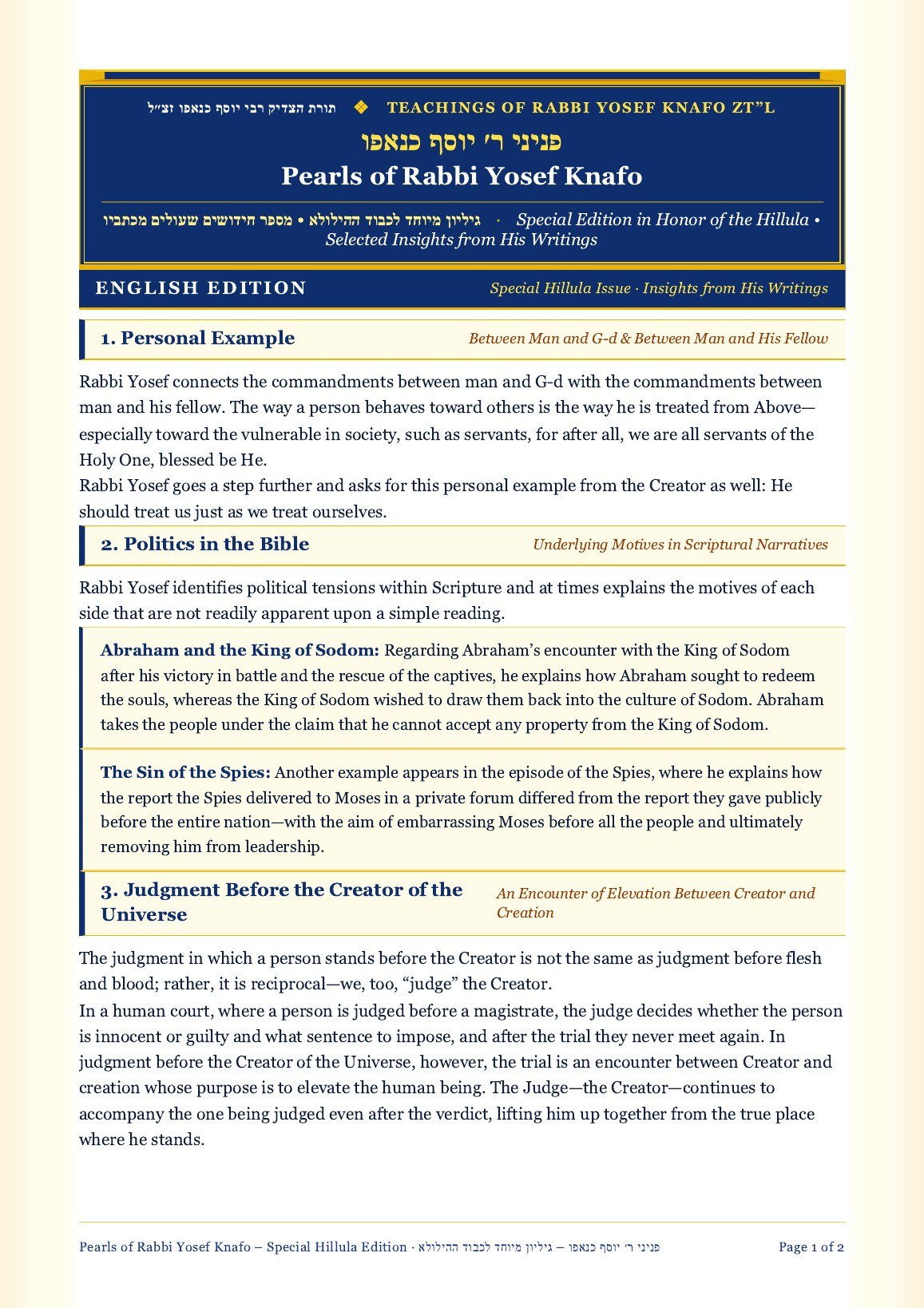
1. Personal ExampleBetween Man and G-d & between Man and His Fellow
Rabbi Yosef connects the commandments between man and G-d with the commandments between man and his fellow. The way a person behaves toward others is the way he is treated from Above—especially toward the vulnerable in society, such as servants, for after all, we are all servants of the Holy One, blessed be He.
Rabbi Yosef goes a step further and asks for this personal example from the Creator as well: He should treat us just as we treat ourselves.
2. Politics in the BibleUnderlying Motives in Scriptural Narratives
Rabbi Yosef identifies political tensions within Scripture and at times explains the motives of each side that are not readily apparent upon a simple reading.
Abraham and the King of Sodom: regarding Abraham’s encounter with the King of Sodom after his victory in battle and the rescue of the captives, he explains how Abraham sought to redeem the souls, whereas the King of Sodom wished to draw them back into the culture of Sodom. Abraham takes the people under the claim that he cannot accept any property from the King of Sodom.
The Sin of the Spies: another example appears in the episode of the Spies, where he explains how the report the Spies delivered to Moses in a private forum differed from the report they gave publicly before the entire nation—with the aim of embarrassing Moses before all the people and ultimately removing him from leadership.
3. Judgment Before the Creator of the UniverseAn Encounter of Elevation Between Creator and Creation
The judgment in which a person stands before the Creator is not the same as judgment before flesh and blood; rather, it is reciprocal—we, too, “judge” the Creator.
In a human court, where a person is judged before a magistrate, the judge decides whether the person is innocent or guilty and what sentence to impose, and after the trial they never meet again. In judgment before the Creator of the Universe, however, the trial is an encounter between Creator and creation whose purpose is to elevate the human being. The Judge—the Creator—continues to accompany the one being judged even after the verdict, lifting him up together from the true place where he stands.
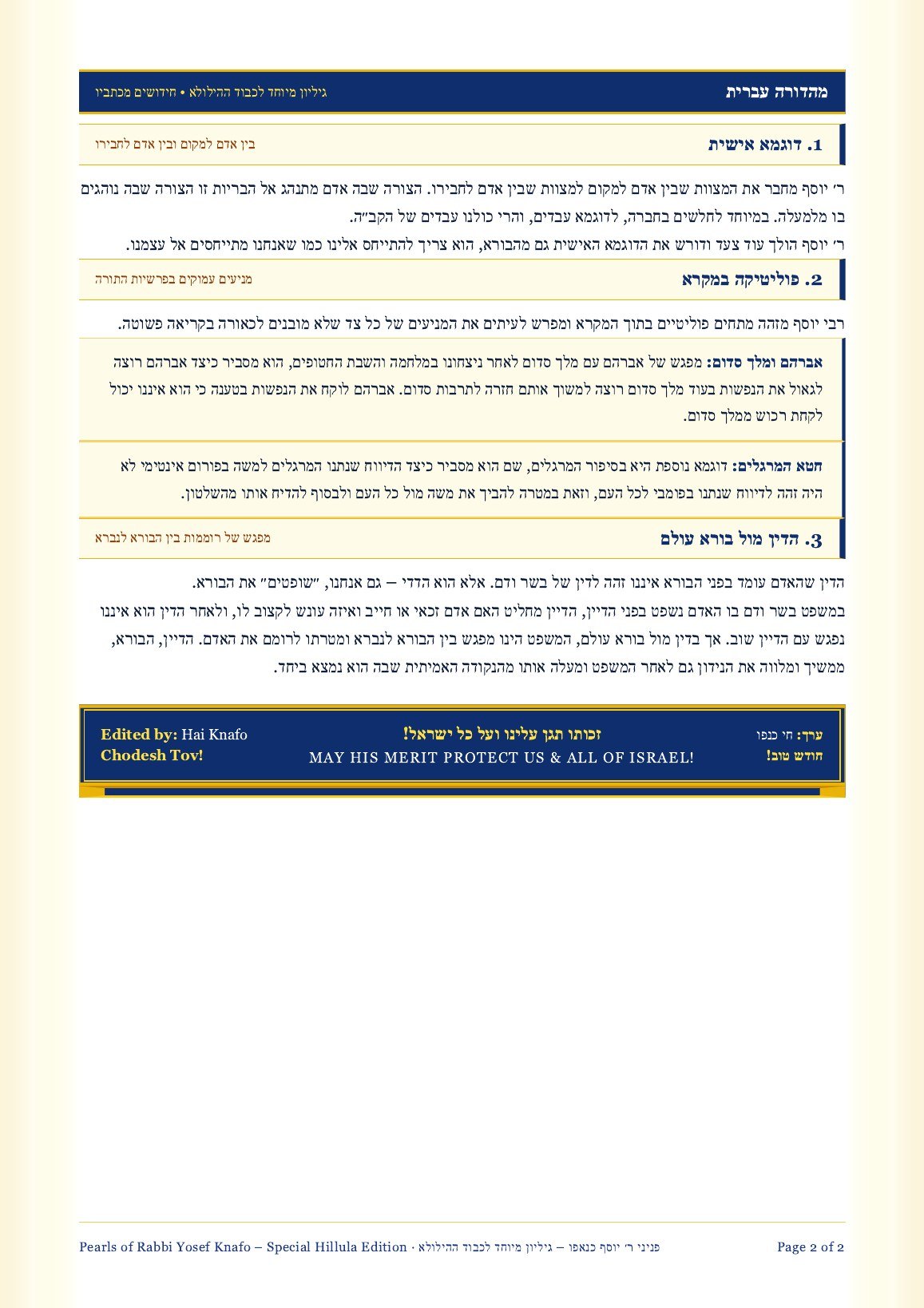
The complete pages, exactly as printed, are below. “May his merit protect us and all of Israel.”
Graphics: Buzaglo Mogador
Chodesh Tov!
חודש טוב! ערך: חי כנפו
