
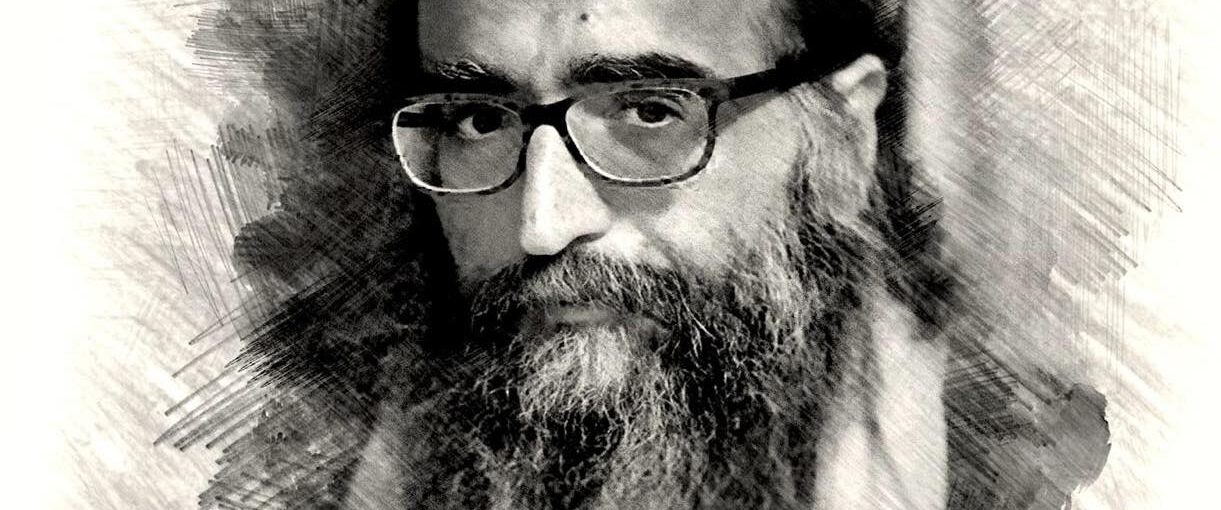
Shabbat is an Inseparable Part of Repentance
The Supreme Remedy for the Flaws of Sin, Adam’s Entry into Shabbat Shuva, and Overcoming Chronic Indecision
There is immense power in Shabbat regarding all matters connected to repentance; Shabbat is an inseparable component of repentance, holding elevated standing and unique segulot, and those of discerning taste know how to utilize these days to the utmost.
Repentance must have Shabbat. It resembles a sick person who goes to the physician; part of the medicinal cure for transgression is Shabbat. Shabbat serves as the remedy for the spiritual blemishes that sin inflicts upon the soul. One must understand a fundamental principle in all matters of repentance: in every repentance, Shabbat is indispensable. Shabbat is part of repentance; there is no repentance without Shabbat.
On Rosh Hashanah at the festive meal, we discussed the soul’s inner struggles. It is arduous for a person to make decisions in life, and every decision is an entire struggle. As the days go by, people who struggle with making decisions find that their condition worsens. In my youth, I recall a neighbor near the Talmud Torah where we studied, an individual who plunged into deep deliberations over every small detail in life, pondering whether it was worth doing or not. His condition deteriorated to such a degree that deciding at an intersection whether to turn right or left would take longer and longer. Day after day, we would find him standing for hours at the crossroads, debating with himself whether to turn right or whether it was preferable to turn left. In short, from that day on, his moniker became "Either-Or" — everything in life was an either-or.
“Shabbat has the power to harmonize and soothe the sinner, introducing him into a transformed reality through its sacred energy.”— Rabbi Yoshiyahu Yosef Pinto Shlita
This is a profound problem in the human soul, sinking into a kind of intellect that evolves daily not into wisdom, but into genuine affliction. A person must maintain agility of thought, be swift in decision-making, and leave the outcome in G-d's hands.
The Shabbat approaching us for good and blessing is a great and momentous Shabbat, concealing sublime segulot concerning all matters of repentance. At the dawn of creation, the Holy One, blessed be He, formed man. Man did not hearken to the voice of his Creator, who warned him not to eat from the Tree of Knowledge, and went ahead and ate. Thereby, he brought death into the world, hardships of livelihood, the anguish of childbirth, and basic curses that constrained the expansive ease of the world.
Following that severe rebellion of man against his Maker by eating from the Tree of Knowledge, G-d stirred man, and man engaged in repentance. Immediately, Adam HaRishon entered into the holy day of Shabbat. That very Shabbat was the Shabbat situated between Rosh Hashanah and Yom Kippur — "Shabbat Shuva". Thus, after the sin, after the remorse, after hearing G-d's shofar blast in the Garden, Adam HaRishon entered directly into the Shabbat of "Return, O Israel, unto the Lord your G-d." The sublime quality of this Shabbat is to balance, soften, and sweeten the sin, ushering a person into an entirely new reality after the sin through the sheer power of Shabbat.
Shabbat possesses the power to balance the sinner, as our Rabbis stated (Shabbat 118b): even if one worshipped idols like the generation of Enosh, if he observes Shabbat meticulously, all his transgressions are forgiven. Shabbat contains an extraordinarily potent power of renewal; after his bitter and grave sin, Adam HaRishon required Shabbat to regain his spiritual equilibrium. Likewise, after committing the first heinous act in the universe by murdering his brother, Kayin was seized with immense terror until the Holy One, blessed be He, granted him assurance: "Whoever slayeth Kayin, vengeance shall be taken on him sevenfold" (Genesis 4:15), signifying that Shabbat would shield and guard Kayin, accompanying him and protecting him. Shabbat holds the power of fencing, distinction, protection, and deliverance.
So we find with David, King of Israel: "One thing have I asked of the Lord, that will I seek after; that I may dwell (Shivti — from the language of Shabbat) in the house of the Lord all the days of my life" (Psalms 27:4). Despite all his life’s struggles, David knew that Shabbat was his strength, his shield, his everything; without Shabbat, life is completely different. Therefore, we must grasp the depth and greatness of the upcoming Shabbat, "Shabbat Shuva" — a Shabbat distinguished above all others, symbolizing the power G-d granted us in the days of Shabbat to serve as the brake within the frantic race of life every week, establishing order amidst the turmoil.
True happiness exists when a person is joyful in Torah, rejoices in study, and looks at the world with a positive, benevolent eye. This brings only good to man. The more you postpone, the worse you act. When you accept repentance upon yourself, do it this very second — not in another two minutes, not in one minute. This instant you are a transformed person; this instant is a new reality. If you decide to be joyful, be joyful right this moment. Work on yourself, transform your thoughts; He who in His goodness renews the creation every day continually — transform! A person can change in a single moment. From this moment be in joy — not until the evening, not in another hour, but right now.
When you know how to seize every moment for repentance, for Torah, for joy, for positive thoughts — never postponing a single fraction of a second — you can earn everything. You do not know if this is the final moment of your life; one does not know if G-d forbid heart failure, an accident, or an emergency will strike. If so, he loses the moment he spent without joy. So it is with repentance: if you do not return right now, you do not know what the next moment will bring. A person's entire lifetime should be spent in repentance, for "there are those who acquire their world in a single hour" (Avodah Zarah 17a). In one single hour properly utilized, you can acquire your entire world.
Eating on the Eve of Yom Kippur Rectifies the Sin of Adam
Subduing the Appetite for Heavenly Purpose, and the Mystery of Sprinkling "One Above and Seven Below"
One who seeks to enter Yom Kippur with true greatness must labor over himself regarding the evil inclination of appetite for food. This is the primary spiritual task one must undertake, as we plead in prayer: "Remember not against us the iniquities of our ancestors" (Psalms 79:8). We entreat the Holy One, blessed be He, to wipe away our earliest transgressions, because once the initial sins are removed, the later transgressions have no foundation upon which to stand.
A person's earliest sins form the soil and weight upon which all subsequent sins are built. The primary, earliest sin of humanity was the sin of the Tree of Knowledge, after G-d commanded him not to eat from it. The Torah testifies that man ate because "it was a desire to the eyes" (Genesis 3:6) — because of physical lust and craving, man ate from the tree and brought unprecedented ruin upon creation.
Therefore, on the eve of Yom Kippur — the day of atonement when man repents — one must eat abundantly, but eat strictly for the sake of Heaven. When a person partakes of his meal on Erev Yom Kippur with holy intent, that eating serves as a direct rectification for Adam HaRishon's eating out of base desire. A person should declare: "I am eating in order to possess the strength to fast; I am eating to have strength for His service, blessed be He, to study Torah and fulfill mitzvot." He does not eat out of craving, but solely for Heaven.
Regarding one who directs his eating in this holy manner, the Gemara declares (Berachot 8b): Whoever eats and drinks on the ninth is regarded by scripture as if he fasted both the ninth and the tenth, because holy eating on the ninth rectifies the primal sin of eating from the Tree of Knowledge.
The Influence of Holiness: One Above and Seven Below
The holy Torah states (Leviticus 16:11–14): "And Aaron shall offer the bullock of the sin-offering... and he shall take of the blood of the bullock, and sprinkle it with his finger upon the ark-cover eastward; and before the ark-cover shall he sprinkle of the blood with his finger seven times." In our Yom Kippur prayers we recount that the Kohen Gadol sprinkled "one above and seven below." Why was this sprinkling so unique?
One explanation is that "one above" represents Yom Kippur itself, the most sacred day of the year. The spiritual labor of Yom Kippur is elevated and intense. The more a person conducts himself in holiness and purity on Yom Kippur, the more it radiates upon all the other days of the week. If Yom Kippur is sanctified with supreme spiritual loftiness, the "seven below" — the seven days of the week throughout the entire year — become purified through the power of that one supreme day.
Furthermore, "one above" corresponds to the Yetzer Tov (good inclination), while "seven below" alludes to the seven names and forces of the Yetzer Hara (evil inclination) cited in the Gemara (Sukkah 52a). When a person sanctifies the good inclination, the seven forces of the evil inclination are subdued before him.
Additionally, the number seven represents the natural order, while that which transcends seven is above nature. When a person sanctifies the "one above" in supreme communion with the Almighty, the seven days of the week are elevated above mundane astrological fortune, existing purely within supernatural Providence.
Question: Honorable Rabbi, when reading stories of Tzaddikim, I see that in order to attain salvation, they had to shake the celestial worlds through their holiness. What can I, as a simple individual, do to merit salvation?
Answer: It is related concerning the holy Baal Shem Tov that one year on Yom Kippur, he wept intensely. When asked why, he revealed that an exceedingly harsh decree was pending in Heaven, and all his holy disciples wept and prayed relentlessly. Afterward, the Baal Shem Tov announced that the decree had been rescinded. When asked who accomplished its nullification, he named a certain simple Jew. They approached this person and asked what he did. He replied: "I know nothing; I merely recited the Aleph-Bet from the depth of my heart and cried to G-d." Through his simple, weeping recitation of the letters, he annulled a decree that all the lofty disciples could not overturn! A person never knows the immense power of his broken heart and sincere prayer; a simple prayer spoken from the depths of the heart can shake and transform entire universes!
A Person Must Never Enter Into Despair
The Deep Lesson of the Book of Jonah, the Walls of the Sukkah, and Acknowledging Our Transience
On Yom Kippur at Minchah, we read the Book of Jonah. Jonah ben Amittai was a prophet whom G-d dispatched to Nineveh, a great city of gentiles, to warn them that their evil had risen before Him and the city would be overturned. Jonah feared that if the gentiles repented, it would evoke a harsh prosecution against Israel who were slower to repent. He sought to flee from the presence of G-d by boarding a vessel at the port of Jaffa.
A tempest arose at sea, and the ship threatened to sink. While the mariners prayed each to his deity, Jonah descended into the ship’s hold to sleep. Lots were cast, falling upon Jonah, who urged them to cast him into the raging sea. A great fish swallowed Jonah, and when he failed to pray, G-d commanded the fish to spew him into the mouth of a female fish crowded with young, which traveled past the Yam Suf. Only then did Jonah break down in fervent prayer, returning to G-d, and the Almighty forgave him.
Why is this specific Haftarah read on Yom Kippur? Because sometimes a person falls into a state of despair. When urged to repent, he cynically wonders: "Will G-d really hear me after all the evil I have committed?" He attends synagogue, but remains emotionally disconnected, thinking: "What else can happen to me? I'll simply carry on." Jonah reached this very state of numbness. What did G-d do? He brought a tempest.
“A person must never enter a state of despair thinking 'whatever happens, happens.' This spiritual numbness is the most dangerous condition of all.”— Rabbi Yoshiyahu Yosef Pinto Shlita
When a person becomes apathetic, G-d sends a storm into his life — sudden turmoil in his home, livelihood, or health. If he still fails to awaken, he is cast into deeper waters, swallowed by circumstances, until he is brought to realize, just as Israel did at the Red Sea, that salvation is solely in G-d's hands. We read this at Minchah of Yom Kippur, the supreme hour when all heavenly gates are open, to instruct every Jew never to succumb to spiritual despair or complacency.
Life is a Temporary Dwelling, Not Permanent
The Gemara (Sukkah 2a) states: "The Torah commanded: Throughout the seven days, depart from your permanent dwelling and dwell in a temporary dwelling." The Sukkah reminds us that our true security does not lie in our sturdy brick homes, but in the shelter of the Almighty. Immediately following the solemn repentance of Rosh Hashanah and Yom Kippur, Sukkot arrives to strip away our illusions of self-sufficiency ("My power and the might of mine hand hath gotten me this wealth" [Deut. 8:17]) and remind us that we reside merely in an antechamber before the palace of eternity (Avot 4:16).
The Gemara records a dispute between the Sages and Rabbi Yehudah regarding a Sukkah taller than twenty cubits: the Sages rule it invalid, while Rabbi Yehudah rules it valid. Why? Because up to twenty cubits, a structure does not require permanent foundations; beyond that height, it requires heavy foundations, resembling a permanent abode. Rabbi Yehudah maintains that even if a person constructs a tall Sukkah with foundations, it still succeeds in instilling the awareness of life's transience in his heart.
Whenever a person boasts excessively in his own strength, G-d demonstrates in a single instant how frail mortal life truly is. As Akavya ben Mahalalel taught (Avot 3:1): "Reflect upon three things and you will not come to sin: know whence you came, whither you are going, and before Whom you are destined to give an account and reckoning."
It is brought from our holy Rabbis that when an individual senses that his faith is slightly weakening or experiencing spiritual fatigue, he should read Parshat Haazinu in the Book of Deuteronomy. Through reading Parshat Haazinu, it is assured that his faith in the Holy One, blessed be He, will be powerfully invigorated. In Shuva Israel, we meticulously read Sefer Devarim every holy Shabbat, which includes Parshat Haazinu. If during the week one feels a lapse in faith, let him recite Parshat Haazinu, and with G-d's help, his Emunah will be renewed.
Rejoice in What You Have: Others Bear Heavier Burdens
The Bed of Straw of Rabbi Akiva, the Hidden Spark of Faith, and Martyrdom with Complete Clarity
The Gemara (Nedarim 50a) recounts concerning Rabbi Akiva, who was among the greatest and holiest souls of the Jewish people. In his youth, he was a simple, unlettered shepherd. At age forty, the daughter of Kalba Savua recognized his modest and refined character, promising to marry him if he committed to studying Torah. Her wealthy father disowned and expelled her with nothing. They lived in extreme poverty in a barn amongst the livestock, sleeping on coarse straw.
One day, Elijah the Prophet appeared disguised as an impoverished beggar, knocking on their doorway and pleading: "My wife has given birth, and we have nothing for her to lie on; could you spare a little straw for her to rest her head?" Rabbi Akiva immediately shared his straw. He then turned to his wife and said: "Look, we at least have straw to lay our heads upon; there are those who possess not even straw! Let us thank Hashem for the straw He has granted us!"
Why did Elijah the Prophet appear to ask for straw instead of gifting them gold or sustenance? Because granting money would not have resolved Rabbi Akiva's spiritual task. Elijah came to impart an eternal lesson: there are always those who suffer far more; one must rejoice and give thanks for whatever he possesses. A person should not require perpetual miracles to maintain his faith.
Filling the Warehouses of Faith
A Jew must constantly fortify his faith in G-d before crises arise, rather than attempting to cultivate conditional belief when calamity strikes. If a person consistently pictures genuine self-sacrifice for G-d, recognizing that all occurrences stem from Divine providence, he will withstand any ordeal.
As the Gemara recounts (Berachot 61b), when the Romans took Rabbi Akiva out to be executed, tearing his flesh with iron combs at the hour of the Shema, his disciples cried: "Our master, even to this extent?" He replied: "All my days I was pained over this verse: 'With all thy soul — even if He takes your soul.' I said: When will it come to my hand that I may fulfill it? And now that it is in my hand, shall I not fulfill it?"
“The past is good and important; but to be saved from the future, one must possess fresh spiritual strength, trust, and alertness, without lingering attachments to the past.”— Teachings of the Rif
Rabbi Akiva felt no pain because his entire life had been an unbroken meditation of faith, filling vast reservoirs of trust in G-d. If a person lives with constant Emunah, the reservoirs he built will stand by him so that "Though I walk through the valley of the shadow of death, I will fear no evil, for Thou art with me" (Psalms 23:4).
Our Vision
“To revive the 2,000-year-old Jewish history of Morocco with dynamic Yeshivot, Midrashot, and especially Kiruv — embracing everything from Mikves and Kashrut to in-depth Torah learning and daily Tefilot.”
Study Torah in Morocco — For Free!
- ✨ Full Scholarship (100% Free Tuition)
- ✨ On-site Full Boarding & Glatt Meals
- ✨ Intensive Daily Torah Lessons
- ✨ Yeshivah & Seminary Advanced Tracks
The Haftarah of the Week
The Connection to Shabbat Shuva and the Atonement of the Nation
The connection to Shabbat: This Haftarah is read on 'Shabbat Shuva', the Shabbat between Rosh Hashanah and Yom Kippur. It speaks about the idea of repentance and these are days of repentance and atonement for Am Yisrael.
Listening to Other People's Hardships
Shabbat Shuva falls in the middle of the Ten Days of Repentance, a time when we seek to increase our merits and find ever more advocates to stand at our side. It appears that one of the greatest defense counsels can be found in the conduct that we wish to highlight in this column, and that is "One who shows white teeth (i.e. one who smiles) to his friend is greater than one who gives him milk to drink". Listening to one's friend with a pleasant smile and genuine interest, is what gives him a good feeling.
An example could be someone who does not put the phone down when an embittered person wishes to pour out his heart, or someone who does not tell his family to say that he is not at home… Rather, he is fully present to listen to the needy person and in this way he merits performing a true act of kindness.
Hagaon Hatzaddik Rabbi Aharon Toisig shlita (Kevodam Shel Yisrael) relates that he merited hearing many times from the holy mouth of the 'Be'er Ya'akov', the Nadvorna Rebbe zt"l, that Hashem merited him with a special gift. When someone comes to speak to him about a matter that is weighing on his heart, once he has related the first few details, he already grasps the rest of what he wishes to say. Despite this, he continues listening to him for many hours.
He explained the reason behind his prolonged listening to matters he has already grasped: "I require merits to be able to respond correctly to all those who seek my advice. So through dedicating my precious time, even though I know all the details of the persons' problem, I thereby cause each person to leave my room with a good feeling. This is noticed by Heaven and in return, I am awarded the siyata dishmaya to answer correctly and with good counsel."
When a friend, teacher or any person listens to someone else and is present one hundred percent, detaching himself from any disturbances such as phone calls and giving him a good feeling, he thereby creates a wonderful atmosphere which can generate remarkable and blessed results!
This does not mean that one should ignore an urgent phone call. It is fine to pick up the phone but it is worthwhile saying initially, "I am waiting for an urgent phone call, it might be that I'll have to stop in the middle." When the one seeking help senses your sensitivity and consideration, it will leave him with a wonderful feeling.
We say in the morning prayers, "To listen, learn and teach". As a play on words, knowing how to listen requires much training and teaching. Once one has acquired the art of listening, not much more is required to effect a transformation.
In the Shemoneh Esrei prayer, we say about Hashem, "You hear the prayer of each mouth". Hashem gives ear and hearkens to all our prayers, even though He is aware of all our requests even before we open our mouths. This is how we should relate to others. We should listen to them and hear them out with patience until they get everything off their chests.
Do Not Flatter
One who speaks lashon hara in order to flatter the listener, transgresses "You shall not bring guilt upon the land" (Bamidbar 35:33), which according to many Ga'onim is considered as the Torah prohibition of flattery. Also, if he hears lashon hara and so as to flatter the speaker he shows his agreement and even adds negative words, he too has transgressed the prohibition of flattery.
A Life in Ruins
A couple in Lyon experienced a devastating car accident. The medics who arrived on the scene and saw their demolished car were sure that there would be no survivors. But by some miracle, the couple emerged alive.
When I came to visit them in the hospital, the husband emotionally told me, “Honored Rav, before the accident, I was a non-believer. But during the accident, I clearly felt Hashem’s hand saving myself and my wife from certain death. Now I am an avid believer!”
I was sure the man would make a complete turnabout in his life. He would certainly begin observing Shabbat, kashrut, and other mitzvot. But only two weeks later, I was most disappointed to find him driving his car on Shabbat.
At first, I found it hard to understand how this Jew had the audacity to desecrate the Shabbat. This man was pulled out of the ruins by Hashem Himself and admitted it. How could he then go and blatantly scorn the mitzvot?
But on reflection, I realized that this incident contained a lesson for me. When a person is aroused to repent, he should not satisfy himself with mere thoughts or even statements of repentance. Rather, he should perform an actual mitzvah, such as beginning to observe Shabbat, going to the Yeshiva to study Torah, or strengthen himself in some other area.
Only a concrete act of holding on to one of the mitzvot will allow a person to maintain the inspiration that he felt. Only an immediate and practical application can transform the awareness of the moment into eternal arousal, which will advance him in his Avodat Hashem.
| City | Start | End | City | Start | End |
|---|---|---|---|---|---|
| 🇲🇦 Rabat | 19:11 | 20:06 | 🇺🇸 New York | 18:41 | 19:39 |
| 🇮🇱 Jerusalem | 18:01 | 19:17 | 🇺🇸 Philadelphia | 18:46 | 19:43 |
| 🇮🇱 Haifa | 18:22 | 19:18 | 🇺🇸 San Francisco | 18:54 | 19:50 |
| 🇮🇱 Tel Aviv | 18:23 | 19:19 | 🇺🇸 Seattle | 18:56 | 19:59 |
| 🇺🇸 Baltimore | 18:51 | 19:48 | 🇨🇦 Montreal | 18:41 | 19:42 |
| 🇺🇸 Boston | 18:30 | 19:29 | 🇨🇦 Toronto | 19:04 | 20:03 |
| 🇺🇸 Chicago | 18:36 | 19:35 | 🇦🇺 Melbourne | 17:54 | 18:53 |
| 🇺🇸 Los Angeles | 18:37 | 19:31 | 🇬🇧 London | 18:50 | 19:56 |
| 🇺🇸 Miami | 19:03 | 19:55 | 🇬🇧 Manchester | 18:59 | 20:08 |
