
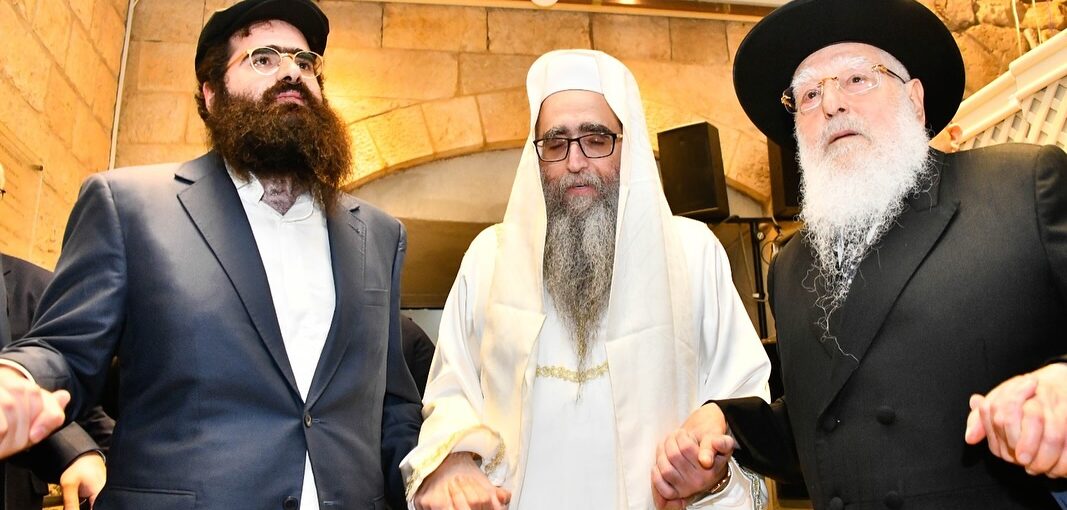
By Shuva Israel Editorial Team
As we reach the awe-inspiring conclusion of the Book of Vayikra (Leviticus) with the double portion of Behar-Bechukotai, we are faced with a demand that shakes the very foundation of our “average” lives. In a recent and profound shiur, our teacher and master, Rabbi Moshe Yoel Pinto, Shlita, opened a gateway into the heart of Jewish faith, explaining how a person can live a life of material abundance without sacrificing their portion in the World to Come.
The Mystery of the “Direct Reward”
The Rabbi began by posing a classic spiritual dilemma: The Gemara tells us about Rabbi Chanina ben Dosa, whose merit sustained the entire world, yet he lived in crushing poverty. When he was granted a “Golden Leg” from Heaven to ease his suffering, he returned it upon realizing it would diminish his reward in the afterlife.
Does this mean every joy in this world costs us our eternity?
Rabbi Moshe Yoel Pinto shared a transformative insight from the Ashmakh Moshe: The commandment of Faith (Emunah) is different. Most mitzvot were given through Moses, the messenger. Therefore, their “wages” are not due until the end of the “day”—the World to Come. But the first of the Ten Commandments, “I am the Lord your God,” was spoken by Hashem directly to every Jewish soul. Because this commandment has no messenger, Hashem pays the reward for our faith here, in this world.
The lesson is clear: If you want success, wealth, and honor that doesn’t “cost” you your soul, you must build your life on the foundation of pure, unwavering Emunah.
The 50th Year: The Danger of Mastery
One of the most striking parts of the shiur focused on the Jubilee (Yovel)—the 50th year when all land returns to its original owners and slaves are set free.
Why the number 50? In Pirkei Avot, 50 is the age of “Advice.” It represents the stage in life where a person feels they have finally “covered” their field; they have 100% mastery and understanding of their business, their craft, or their city.
However, the Rabbi warned of a spiritual trap: The moment you think you are 100% in control, Hashem takes it away.
-
As long as a person feels unsettled and knows they depend on Hashem, God leaves the blessing in their hands.
-
The moment a person becomes self-reliant and “certain” of their power, the Jubilee arrives to uproot them.
True ownership is the knowledge that we own nothing; we are merely stewards of the King’s property.
The Paradox of Two Sabbaths
Rabbi Pinto explored the relationship between the weekly Shabbat and the Sabbatical Year (Shemitah). While they share a name, they seem to represent opposite ideas:
-
Shabbat tells us to step away from the world because work is mundane and we must retreat into the sacred.
-
Shemitah tells us that the land itself is so holy that we are not worthy of working it.
The bridge between these two is the human being. The Rabbi taught that holiness is not in objects, places, or mountains. Mount Sinai was holy only while the Shekhinah was upon it; afterward, it became a common desert.
The holiness comes from you. Whether you are in the synagogue or at your desk in the office, you have the power to sanctify the mundane through your thoughts. When you work with the intention of giving Tzedakah or supporting Torah, your “material” labor becomes a “spiritual” sacrifice.
The Reset to Zero
The shiur concluded with a powerful reminder of our need to “reset.” Many people suffer because they carry the worries of the previous week into the next.
Rabbi Moshe Yoel Pinto urged us to embrace the “7th Day” mindset: On Shabbat, see your work as 100% complete. Reset your spiritual and material worries to “absolute zero.” Only by stopping completely can we begin a new week with the joy and freshness required to serve Hashem.
A Special Opportunity: The Rabbi noted the holy tradition of Rabbi Yitzchak of Volozhin: One who fasts on the Friday of Behar-Bechukotai and completes Shnayim Mikra (reading the portion twice in Hebrew and once in translation) with devotion, will see their prayers accepted and all harsh judgments removed.
May we all merit to ascend to the lofty places Hashem expects of us, reaching the conclusion of Vayikra with hearts full of faith and lives full of blessing.
