
“And These Are the Generations of Yitzchak, Son of Avraham: Avraham Begot Yitzchak”
The Greatness and Test of Acting Above One’s Innate Nature, and How the First Breakthrough Opens the Path for All Generations
The Holy Torah states in this week’s Parsha: “And these are the generations of Yitzchak, son of Avraham: Avraham begot (holid) Yitzchak” (Bereishit 25:19). Let us ask two foundational questions: First, why does the verse use the present-tense form holid (“begets”) rather than the past-tense yalad (“begot”)? Second, we recite every day in our prayers: “Az yashir Moshe” — “Then Moshe will sing” (Shemot 15:1), written in the future tense rather than past tense! What deep principle connects both verses?
Rashi explains that the scoffers of the generation claimed Sarah had conceived from Avimelech, and therefore Hashem formed Yitzchak’s facial features to resemble Avraham identically. Yet we must understand: surely the scoffers did not claim Sarah literally conceived from Avimelech twenty years earlier, for a pregnancy does not last twenty years! Rather, their argument was rooted in a profound spiritual law: a person can only bring forth and give into the world what already exists within him. One who possesses wealth can give charity; one who possesses wisdom can impart wisdom; one cannot give what he does not possess.
It is known that Avraham Avinu embodies the attribute of Chesed (loving-kindness), Yitzchak embodies Gevurah and Din (strict judgment and restraint), and Yaakov embodies Tiferet (harmony uniting kindness and judgment). The scoffers argued: “How could Avraham, who is pure Chesed, beget Yitzchak, who is pure Din? Kindness cannot give birth to strict judgment!” However, the truth is that Avraham was not born with the nature of Chesed—he was born in Charan (from the root charon, wrath and judgment), meaning his innate temperament was strict judgment! Avraham worked tirelessly on himself and transformed his very essence from judgment into boundless kindness. Thus, when Yitzchak was born, he drew from Avraham both judgment and kindness.
And herein lies a person’s ultimate greatness and test in life: doing what already aligns with your natural temperament is no great achievement—a naturally generous person giving charity is not facing a major test. A person’s true test is when he lacks a certain trait by nature and rises above his innate instincts to act for Hashem—just as Avraham transformed his innate judgment into absolute kindness.
“Doing what already comes naturally to you is no great test; a person’s true greatness is measured when he rises above the nature with which he was created and transforms his very essence for Hashem!”
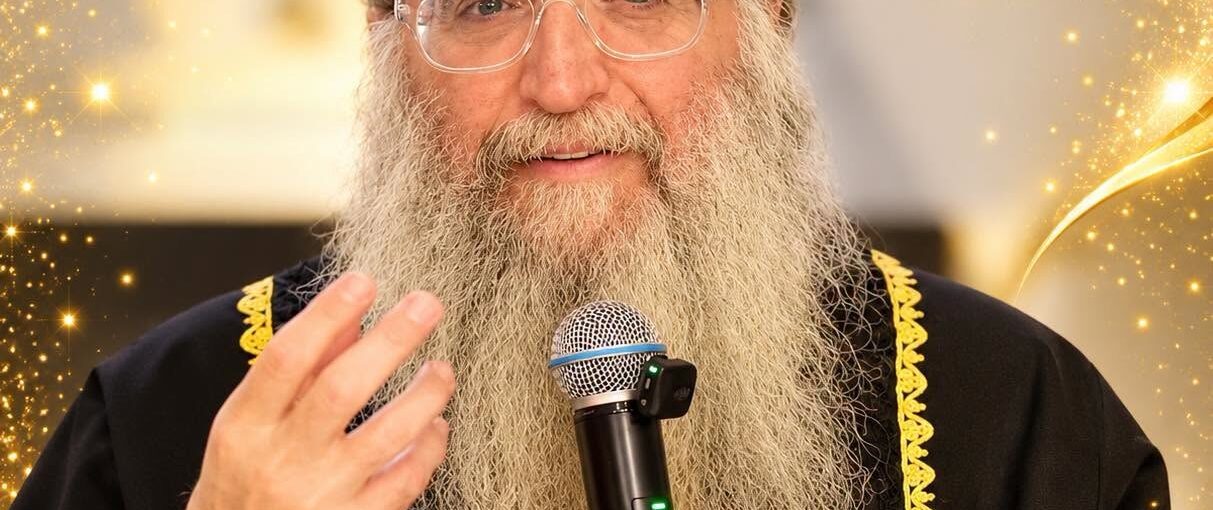
— Rabbi Yoshiyahu Yosef Pinto Shlita
“Avraham Begot Yitzchak”: The First Breakthrough Opens the Gate for Everyone
We can now also understand why both “Avraham holid (begets) Yitzchak” and “Az yashir (will sing) Moshe” are phrased in ongoing and future tenses. Every first step in life is difficult—just like putting on a brand-new shoe that pinches and hurts at first, until it is broken in and becomes comfortable. Whether performing a mitzvah for the first time, establishing the very first yeshiva, or pioneering a difficult business venture, the first pioneer bears the heaviest struggle; once he breaks through, the path becomes effortless for everyone who follows.
So too in Al HaNissim on Chanukah and Purim we say, “In those days, at this time”: once a miracle was enacted “in those days,” it unlocked the spiritual channel so that “at this time” salvation can manifest far more easily. Sarah Imeinu was barren, and through the miracle of Yitzchak’s birth, she opened the gate for every barren woman in future generations to be remembered with children—therefore “Avraham holid Yitzchak” continues eternally! Likewise, the splitting of the Sea of Reeds (“Az yashir Moshe”) did not end in that hour; our forefathers paved an eternal highway of salvation so that whenever a Jew faces a locked, impossible crisis, he can draw strength from the miracles of Yitzchak’s birth and the splitting of the Sea.
CHINUCH & WISDOM
Our early commentators (Rishonim) note a vital lesson regarding how Yitzchak Avinu educated Yaakov and Esav. Yitzchak placed both twins in the exact same yeshiva, on the same bench, with the exact same schedule and study regimen. For Yaakov Avinu—“a wholesome man, dwelling in tents” (Bereishit 25:27)—immersive Torah study was pure vitality and matched his soul. For Esav, however, whose temperament was completely different, forcing him onto a study bench hour after hour when he was not built for it had the opposite effect: instead of becoming a respected, G-d-fearing layman (ba’al habayit) who worked honestly and set fixed times for Torah, sitting trapped in frustration turned him into “a cunning hunter, a man of the field”—like a predator crouching silently among the trees waiting to pounce.
Every child is an entire world unto himself, and every spouse, friend, and business partner requires an individualized approach. One can never say, “I educated my first child this way, so I will educate the next one identically.” True wisdom in education and human relationships means adapting our guidance to each person’s unique soul—never forcing someone into a rigid mold, stretching him if he is short or cutting him down if he is tall.
“And Yitzchak Entreated Hashem Opposite His Wife Because She Was Barren, and Hashem Allowed Himself to Be Entreated by Him”
How Supernatural Miracles Operate as a Heavenly Loan From Nature, and Why Hashem Answers the Prayer of One Who Accepts Suffering With Joy
The Torah recounts the extraordinary miracle of Yitzchak’s birth to Avraham and Sarah in their old age, as well as the barrenness of Yitzchak and Rivkah. To understand the inner mechanics of miracles, one must know a foundational principle: every supernatural miracle granted to a person comes about in one of two ways—either Hashem deducts it from the person’s stored merits, or Heaven “borrows” the miracle from the laws of nature as a loan that must eventually be repaid.
Hashem established fixed laws of nature during the Six Days of Creation—the sun, moon, and stars each follow their appointed orbit. When a person presses Heaven in prayer for children or livelihood beyond the natural order and Hashem performs a miracle, nature registers a claim until that “loan” is balanced. We find this principle clearly illustrated in three places in Scripture:
First, when Yaakov fled from Esav, the sun set early so he could rest, and later “the sun shone for him” (Bereishit 32:32). The Gemara (Sanhedrin 95b) explains that the sun protested to Hashem, “You altered the order of Creation and deprived me of hours of shining!”—so Hashem later repaid those exact hours to the sun. Second, at the splitting of the Sea of Reeds (“The sea saw and fled… Who turns the rock into a pool of water”, Tehillim 114:3–8), Hashem borrowed dry land from the waters so Israel could cross, and the waters protested until Hashem repaid them by transforming the flinty rock into Miriam’s well in the desert.
Third, so too with Yitzchak’s birth: when Sarah was taken to Avimelech’s palace, “Hashem had completely closed every womb of the house of Avimelech” (Bereishit 20:18), withholding fertility from nature at that time; twenty years later, when Sarah conceived Yitzchak, Hashem repaid that “loan” back to nature! That is why the scoffers connected Yitzchak’s birth to Avimelech, and why a miracle carries heavenly scrutiny until its debt is settled.
“When a person endures hardships yet accepts everything with love, faith, and joy—without complaints or arguments—his prayers carry immense weight before the Throne of Glory!”
— Rabbi Yoshiyahu Yosef Pinto Shlita
Accepting Hardships With Joy: Why Hashem Answered Yitzchak’s Prayer
Yitzchak and Rivkah stood in opposite corners of the room praying for children—Yitzchak in the south, Rivkah in the north—yet the Torah states: “And Hashem allowed Himself to be entreated by him”—specifically Yitzchak! Why did Yitzchak’s prayer prevail? Because when a person suffers afflictions yet accepts every decree with love and joy, his prayer possesses unmatched power. Yitzchak Avinu endured profound trials—he was bound upon the altar as a perfect offering, he witnessed his mother Sarah pass away upon hearing of the Akeidah, and his eyesight grew dim—yet he never uttered a single complaint against Hashem, embracing all with love and joy.
The Gemara (Sanhedrin 92b) contrasts King David with the wicked Nebuchadnezzar: after King David completed the Book of Tehillim, Nebuchadnezzar began reciting praises to Hashem so lofty they nearly rivaled David’s psalms, until an angel poured molten gold into Nebuchadnezzar’s mouth to silence him! Why? Because Nebuchadnezzar praised Hashem only while surrounded by wealth, power, and world dominion—the moment he faced the slightest discomfort, he cast everything aside. King David, by contrast, composed Tehillim while pursued by his own son and besieged by relentless troubles, praising Hashem from the depths of suffering! This is the meaning of “And we bend the knee and bow down” in Aleinu: even when bent beneath heavy burdens, a Jew bows in gratitude to Hashem.
EMUNAH & PRAYER
Question: Honored Rabbi, we see that even after Yaakov Avinu received an explicit promise from Hashem, he still feared lest sin cause the promise to be forfeited. If a person receives a blessing or promise from a holy tzaddik, should he likewise fear that sin might undo it, or does Hashem uphold the tzaddik’s word even if the recipient is unworthy?
Answer: We learn a crucial lesson from the prayers of Yaakov Avinu and Moshe Rabbeinu. When Yaakov departed Beersheba, even after beholding the Divine Presence and angels ascending and descending, he prayed: “If G-d will be with me… and give me bread to eat and clothing to wear, and I return in peace to my father’s house…” (Bereishit 28:20–21). Why didn’t Yaakov simply ask Hashem to bring him straight back home and immediately pacify Esav? Because Yaakov understood that if his primary request were withheld, he needed an immediate fallback—at least basic bread to eat and garments to wear! Similarly, when Moshe Rabbeinu pleaded to enter the Land of Israel, he immediately added: “Let me cross over, I pray, and see” (Devarim 3:25)—meaning, “If I do not merit entering the Land, at least grant me half: let me behold it with my eyes!” Whenever a person holds a tzaddik’s blessing or prayer, he must guard himself carefully against sin and simultaneously prepare a secondary vessel so that even if he does not receive the entirety of the blessing, he still merits a meaningful measure of salvation.
“And the Children Struggled Within Her, and She Said: ‘If So, Why Am I Thus?'”
How Husband and Wife Divide Their Prayers, Honoring Torah Scholars for Righteous Children, and Finding One Point of Good in Every Trial
In this week’s Parsha, Yitzchak stood in the south corner of the room while Rivkah stood in the north corner to pray for children (Bereishit 25:21). Why did each choose a different direction? The Gemara (Bava Batra 25b) teaches: “One who wishes to grow wise in Torah should turn south; one who wishes to become wealthy should turn north.” Yitzchak prayed toward the south because a husband’s primary focus in prayer must be on spiritual matters—Torah, fear of Heaven, and righteous children—while Rivkah prayed toward the north because a wife holds the spiritual key to household sustenance and livelihood (as the Sages teach, “Honor your wives so that you may become wealthy,” Bava Metzia 59a).
Honoring Torah Scholars: The Segulah for Raising Righteous Children
When Rivkah passed houses of idolatry, Esav struggled to emerge; when she passed Torah study halls, Yaakov struggled to emerge. Rivkah immediately went to inquire of Hashem at the academy of Shem and Ever. Why did turning to Torah scholars resolve her distress? Because Rava teaches (Shabbat 23b): “One who loves and assists Torah scholars merits sons who are Torah scholars; one who honors Torah scholars merits sons-in-law who are Torah scholars.” Especially in our generation, when the Evil Inclination rages and educating children in the path of Torah is so demanding, supporting, assisting, and honoring Torah scholars is the surest segulah to merit children and sons-in-law devoted to Torah and mitzvot.
The Danger of Straddling Two Worlds & Finding One Point of Good
Before Shem and Ever revealed that she was carrying twins, Rivkah was anguished because she feared she had one child pulled simultaneously toward Torah and toward idolatry. There is nothing more dangerous than a person who straddles both sides—attending yeshiva on one hand while indulging in sin on the other, or waging strife under the banner of “for the sake of Heaven.” The Mishnah (Keilim 17:13) teaches that all sea creatures are ritually pure except the kelev hamayim (seal), which flees to land when threatened in the sea and flees to the sea when threatened on land—belonging to neither realm. That is why we pray on Rosh Hashanah: “May we be a head (rosh) and not a tail”—wholly committed to doing the will of our Father in Heaven.
“In every hardship and crisis—even the darkest—search for a single point of good and expand it; you can never imagine how much light and salvation will emerge from that one small spark!”
— Rabbi Yoshiyahu Yosef Pinto Shlita
Once Shem and Ever told Rivkah, “Two nations are in your womb” (Bereishit 25:23)—and that from Yaakov would descend Rabbi Yehudah HaNasi (Rebbi) and from Esav would descend Antoninus, who converted and helped Rebbi compile the Mishnah—Rivkah was comforted! Even though Esav’s descendants would persecute Israel for centuries, finding that single redeeming point of good gave Rivkah peace of mind—just as Moshe Rabbeinu looked ahead through all generations to see whether even one meritorious descendant would emerge from the Egyptian taskmaster before striking him (Shemot 2:12).
“Grasping Esav’s Heel”: Drawing Out the Soul of Rabbi Akiva
From birth, Yaakov and Esav locked in an eternal struggle: Esav took This World, and Yaakov took the World to Come. Moshe Rabbeinu embodies the Written Torah, while Rabbi Akiva embodies the Oral Torah—and the forces of impurity fought fiercely to keep Rabbi Akiva’s lofty soul trapped in darkness. At birth, Yaakov’s hand was “grasping (ochezet) Esav’s heel (b’akev Esav)” (Bereishit 25:26)—whose initial letters spell עקיב״א (Akiva)! Although Rabbi Akiva descended from converts and initially hated Torah scholars intensely (Pesachim 49b), Yaakov’s grasp on Esav’s heel drew Rabbi Akiva’s holy soul out of impurity into supreme sanctity, giving Israel the foundation of the Oral Torah.
SEFER DEVARIM SPROUTS SALVATION!
SEGULAH FOR SHIDDUCHIM
People constantly ask us for a segulah to find their soulmate (shidduch). While many segulot are suggested, the simplest and most proven segulah comes directly from Yitzchak Avinu in this week’s Parsha: “And Yitzchak went out to converse (lasuach) in the field toward evening” (Bereishit 24:63)—which Rashi explains refers to the Minchah afternoon prayer! Precisely when Yitzchak prayed Minchah with deep devotion (deveikut), he lifted his eyes and merited his destined bride, Rivkah. Praying Minchah every day with focus and heartfelt attachment to Hashem is a time-tested segulah to merit one’s true soulmate.
Serving Hashem Without Expecting Any Reward, and Leaving Your Worries Outside Each Night
How the Holy Maharsha Gave Away His Entire World to Come to Serve Hashem Purely, and the Villager’s Secret of the Tree
A remarkable story is told of the supreme saint and commentator, Rabbi Shmuel Eliezer HaLevi Eidels—the holy Maharsha. Opposite his yeshiva stood a church led by a vicious priest who relentlessly persecuted the Jews. Before his passing, the Maharsha instructed his disciples in his will to place his coffin at the entrance of that church for a set period before burial; as his coffin rested there, the church sank deeper into the earth by a handbreadth every few moments until it was completely swallowed underground!
During his lifetime, the Maharsha built a great yeshiva, and upon completing construction he was burdened with colossal debts he had no way to repay. He gathered all the Jews of the city and surrounding towns to donate, yet only meager sums trickled in. Overcome with distress, the Maharsha stood up and declared: “Whoever donates a large sum toward the yeshiva, I will grant him my entire portion in the World to Come!” Immediately, the wealthy men of the city began bidding fiercely against one another for the Maharsha’s World to Come! When the highest bid was tallied, it still fell short of the remaining debt.
The Maharsha rose again and announced: “Whoever gives the remaining balance to finish paying off the yeshiva’s debt, I will give him my entire future World to Come—all the Torah I learn and all the mitzvot I perform from today until the day I die!” Once more the philanthropists competed until one donor paid the entire balance. As soon as the debt was cleared, the Maharsha rose from his chair and began dancing with boundless joy! Astonished, his disciples asked, “Rebbe, why are you rejoicing so exuberantly simply because the yeshiva’s debts are paid?”
The Maharsha replied: “I am rejoicing because from this moment onward, every single mitzvah I perform and every word of Torah I study will be done purely for Hashem’s sake—with complete sincerity, humility, and awe, without the slightest thought of receiving any reward in the World to Come!” A person must strive to reach such purity of faith: serving Hashem wholeheartedly without calculating future reward.
“Hang all your worries and anxieties outside your door before you step into your home at night; by morning, thirty to forty percent of the problems you were keeping alive in your mind will have vanished on their own!”
— Rabbi Yoshiyahu Yosef Pinto Shlita
Leave Your Problems Outside Your Home Every Night
An ancient parable tells of a traveler whose car ran out of fuel late at night on a desolate country road. A simple villager offered him shelter for the night, promising they would travel together at daybreak to a distant station for fuel. Having no choice in the freezing night, the traveler accompanied the villager to his cottage. Before stepping inside, the villager stopped beside a tree in his yard and began speaking aloud to it at length. The educated traveler thought to himself, “What a primitive, naive man, talking to a tree!”
The next morning, as they set out for fuel, the villager again paused beside the same tree, spoke to it briefly, and walked on. Overcome with curiosity, the traveler politely asked, “Forgive me for asking, my friend, but why were you speaking to that tree last night and again this morning?”
The villager smiled and explained: “All day long I toil at backbreaking labor, enduring insults, deceit, and hardships that ache in my heart. Every evening before I enter my home, I come to this tree and hang all my worries upon its branches—like hanging up heavy bags—so I can walk into my house clean, calm, and joyful with my family, without losing sleep or brooding over problems all night. Then in the morning, I come back to the tree to pick up my worries—and every single morning, thirty to forty percent of the problems I hung on that tree the night before have fallen away and no longer even exist!”
When a person keeps worries locked inside his head, he feeds them, breathes life into them, and multiplies them; if he consciously detaches from them each night and leaves them outside his door, he will discover by morning that a third of his anxieties were never real at all.
JOIN THE HOLY WHATSAPP GROUPS OF THE ADMOR RABBI YOSHIYAHU YOSEF PINTO SHLITA
PICTORIAL CHRONICLE


Our Vision
“To revive the 2,000-year-old Jewish history of Morocco with dynamic Yeshivot, Midrashot, and especially Kiruv — embracing everything from Mikves and Kashrut to in-depth Torah learning and daily Tefilot.”
Study Torah in Morocco — For Free!
-
Full Scholarship (100% Free Tuition) -
On-site Full Boarding & Glatt Meals -
Intensive Daily Torah Lessons -
Yeshivah & Seminary Advanced Tracks
Address: Rue Misk, 9 Hay Riad, Rabat, Morocco
Apply / Inquire Now: +972 54-660-9744
Official Website: www.shouvaisrael.com
“The prophecy of the word of Hashem” (Malachi 1,2)
The Connection to the Parsha
The connection to the Parsha: The Haftarah speaks about Ya’akov and Esav, as it says: “Was not Esav the brother of Ya’akov”, while the Parsha tells of the birth of the twins, Ya’akov Avinu a”h and Esav the rasha, and their offspring.
Speaking About Outward Appearance
Laws of Shmirat HaLashon
We previously mentioned that it is forbidden to say negative words even if the speaker does not consider it as something negative, just as it is also forbidden to say something that is not essentially negative, if the speaker or the listener consider it as negative.
This can be demonstrated with the example of speaking about someone’s external appearance and way of dress. Even though there may be nothing wrong with this way of dress, it is nevertheless forbidden to say that he dresses in this way if the speaker or listener do not consider this way of dress in a positive light.
Salvation in the Merit of Charity
How an Upcoming Appeal for Tzedakah Diverted a Journey by Moments and Saved Lives From a Catastrophic Collision
In a city near New York lives a family who was hit by tragedy. An expectant mother slipped and fell, and she and her unborn child sadly passed away. This calamity shook the entire community. In its wake, the community members asked various Rabbanim to deliver words of inspiration.
I, too, was asked to provide words of encouragement. After my speech, an appeal would be made for tzedakah for the poor. I asked my host in New York to drive me to the Beit Hakneset where I was scheduled to deliver my talk. As we were traveling, the man turned to me and asked if I minded if he made a detour. He very much wanted to show me the yeshiva where his son learned. At first, I hesitated. But as he promised that it would take no longer than a minute, I acquiesced.
After showing me the yeshiva, we continued on our way to the Beit Hakneset. We were suddenly met by a ghastly sight. Exactly at the spot where we would have driven a moment earlier, a terrible accident had occurred. A mammoth truck had smashed into a private car that was coming in the opposite direction. The two occupants had been flung into the street and were lying by the roadside. No one knew if they were still alive.
I trembled at this sight. Had we not changed our route, we would most likely have been a part of that horrific scene.
I have no doubt that the upcoming appeal for tzedakah was what saved us from this accident since the mitzvah of tzedakah has the power to save a person from all harm.
“Tzedakah tatzil mimavet — Charity saves from death. Even before a mitzvah of tzedakah is physically completed, the pure intention to give charity to the poor shields a person from every danger!”
— Lesson From Walking in Their Ways
THIS WEEK
- 4 Kislev Rabbi Yaakov David Kalish of Amshinov
- 5 Kislev Rabbi Chaim David Ben Soussan, Av Beit Din Casablanca
- 6 Kislev Rabbi Shmuel Pinto, son of Rabbi Daniel Pinto
- 7 Kislev Rabbi Rafael David Sebban, Chief Rabbi of Turkey
- 8 Kislev Rabbi Avraham HaKohen, author of Mishmerot Kehunah
- 9 Kislev Rabbi Natan Salem, Sage of Yeshivat Porat Yosef
- 10 Kislev Rabbi Isser Zalman Meltzer, Rosh Yeshiva of Eitz Chaim
Parshat Toldot
| City | Start | End | City | Start | End |
|---|---|---|---|---|---|
 Rabat |
18:07 | 19:04 |
 New York |
16:21 | 17:22 |
 Jerusalem |
16:01 | 17:19 |
Philadelphia |
16:27 | 17:28 |
|
Haifa |
16:20 | 17:19 |
San Francisco |
16:41 | 17:41 |
|
Tel Aviv |
16:22 | 17:20 |
Seattle |
16:16 | 17:23 |
|
Baltimore |
16:35 | 17:35 |
 Montreal |
16:07 | 17:12 |
|
Boston |
16:05 | 17:08 |
Toronto |
16:36 | 17:39 |
|
Chicago |
17:13 | 18:15 |
 Melbourne |
19:49 | 20:53 |
|
Los Angeles |
16:32 | 17:29 |
 London |
15:55 | 17:07 |
|
Miami |
17:14 | 18:09 |
Manchester |
15:57 | 17:11 |
