
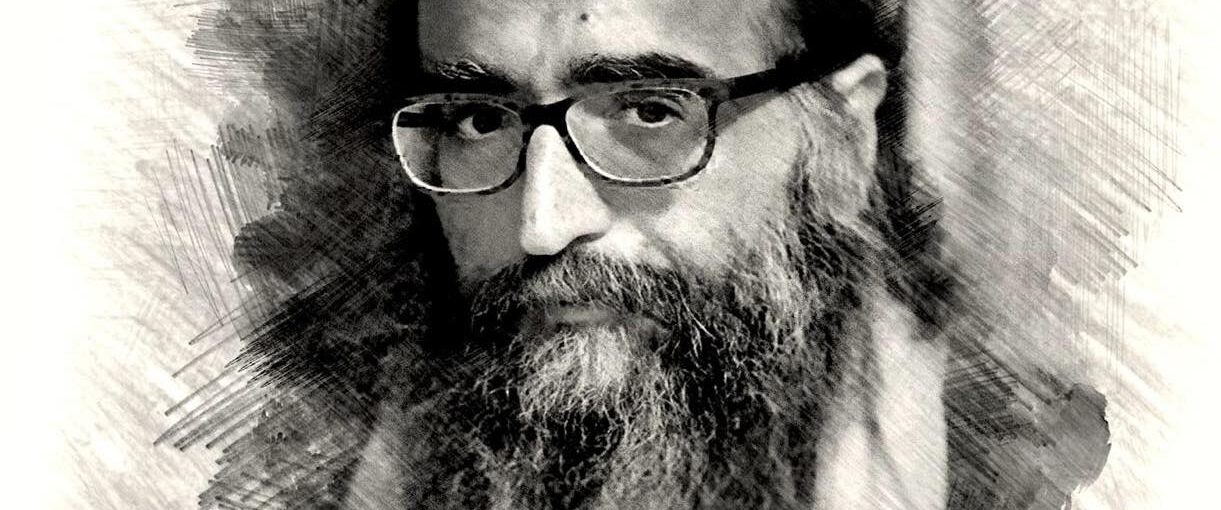
‘Ye Stand This Day All of You Before the Lord Your G-d’
The Ten Groups of Israel, the Symmetry of the Ten Commandments, and the Collective Bond of Arvut
In this week's Torah portion, the holy Torah says: "Ye stand this day all of you before the Lord your G-d; your captains of your tribes, your elders, and your officers, with all the men of Israel, your little ones, your wives, and thy stranger that is in thy camp, from the hewer of thy wood unto the drawer of thy water." It is known what our holy Rabbis say: "Ye stand this day" — 'Today' refers to the great day, the day the world was conceived (Hayom Harat Olam), Rosh Hashanah.
And so it is brought in the holy Zohar (Bo, 32b) on the verse "Now there was a day when the sons of G-d came to present themselves before the Lord, and Satan came also among them" (Job 1:6), that "the day" symbolizes Rosh Hashanah. "And it came to pass on the day" — this day is Rosh Hashanah, a time of strict justice and judgment, when the Holy One, blessed be He, stands to judge the world.
“In the nation of Israel, there is mutual responsibility (Arvut) between one another, and when a Jew strengthens himself, it influences everyone, and vice versa.”— Rabbi Yoshiyahu Yosef Pinto Shlita
Based on this, we can explain and state a fundamental principle from what the Torah tells us, "Ye stand this day." The Torah enumerates ten types of groups within the nation of Israel: "your captains" is one group, "your tribes" is a second group, "your elders" is a third group, "and your officers" is a fourth group, "all the men of Israel" is a fifth group. These are five groups mentioned in the Torah on one side. On the second side, there are also five groups: "your little ones", "your wives", "and thy stranger that is in thy camp", "from the hewer of thy wood", "unto the drawer of thy water".
When we take these ten groups and divide them like the Ten Commandments — five commandments on one side and five commandments on the other side — we will see that "your captains" corresponds to the first commandment, "your tribes" to the second, "your elders" to the third, "your officers" to the fourth, "all the men of Israel" to the fifth.
And on the second side of the tablets: "your little ones" corresponds to the sixth commandment, "your wives" to the seventh, "thy stranger" to the eighth, "the hewer of thy wood" to the ninth, and "the drawer of thy water" to the tenth commandment. It is also known that the Ten Commandments correspond to the Ten Utterances with which the world was created.
If we look at the sixth group that the Torah enumerates, which is "your little ones" (Tafchem), it corresponds to the sixth commandment "Thou shalt not murder" (Lo tirtzach). Based on this, it can be said: "your little ones" refers to the children. A person who does not know how to educate his children and lets them walk in a path that is not of Hashem, who does not invest in his children and does not behave wisely and intelligently with the fear of Heaven toward them, causes his children to deteriorate in a bad way and to bad and difficult places, until they reach the most severe commandment, "Thou shalt not murder".
One must know a great principle: all the ten groups in the nation of Israel are connected to one another. In the nation of Israel, there is a mutual responsibility (Arvut) between one Jew and another, and every Jew is tied to his fellow with an incredibly strong bond. When one commandment is not fulfilled, all the other nine commandments fall, and the person falls in everything. When everyone elevates and strengthens themselves, and everyone sanctifies themselves, there is mutual responsibility in the nation of Israel, and one uplifts and elevates the other.
Also, the Ten Commandments correspond to the Ten Days of Repentance (Aseret Yemei Teshuvah). Every day during the Ten Days of Repentance rectifies a different commandment of what the Holy One, blessed be He, commanded us. Thus, the three things — the Ten Commandments, the Ten Utterances, and the Ten Days of Repentance — are all tied together. When one strengthens, everything strengthens; when one weakens, all of them weaken.
Thus, when everyone clings to the Holy One, blessed be He, and prepares themselves for judgment and reckoning, to approach Hashem with awe, fear, and great submission, then the Holy One, blessed be He, looks at the judgment of mutual responsibility in the nation of Israel — that everyone is responsible for one another — and He bestows a great abundance, granting Siyata Dishmaya (heavenly assistance) and uplifting everyone.
Please, righteous ones, be meticulous with all the teachings, conduct, and customs of "Shuva Israel", to follow them with devotion; the holy Zohar, to strengthen it, to prepare, ready, and distribute it with all our might on the 25th of Elul; to strengthen the Book of Deuteronomy (Sefer Devarim). With Hashem's help, there will be success, blessing, salvation, and all good, with Hashem's help.
Life is an extremely difficult struggle, and there are many things in life that try to pull a person down and take him to a bad place. It is just hard for a person to choose the right path, and only after a person sinks into things that are not good, bad behavior, a bad reality, a flawed reality of life, does he wake up and try to turn back, but he cannot find the way back. Every person must know to guard the purity of his soul and the good that the Holy One, blessed be He, gave him, and not to spoil the good that Hashem gave him. Do not follow the Evil Inclination as a captive to a bad place, but remain in the purity that the Holy One, blessed be He, gave to man.
A Person Who Sanctifies Himself on the Last Shabbat Influences His Rosh Hashanah Accordingly
The Source of Blessing for the Coming Year, Subduing the Adversary, and the Cry from the Pit
The upcoming Shabbat is the last Shabbat of the year. The entire essence and the complete rectification of all the Shabbats of the year are found in this Shabbat. When a person behaves in the path of Hashem, in the correct and appropriate way on this holy Shabbat, it draws down great abundance and rectifies all the Shabbats that were lacking throughout the entire year.
It is known that Shabbat is the source of all blessing, and if the Shabbat is on a good and correct path, then the essence of the entire week is rectified and ascends to a high level before the Holy One, blessed be He. The entire essence of Rosh Hashanah draws from this holy Shabbat, and if we are in holiness and purity on Shabbat, with great spiritual elevation toward Hashem, then we influence that on Rosh Hashanah as well; we will have the greatest influence and power, and we will be able to ascend to the highest levels on Rosh Hashanah.
“One must know that at the time a person has a trouble or a problem, a great salvation for the person is hidden within it.”— Rabbi Yoshiyahu Yosef Pinto Shlita
Rosh Hashanah is the Day of Judgment, the day when the entire essence of a person's life passes before the Holy One, blessed be He, on Rosh Hashanah. Therefore, if on this holy Shabbat a person knew in holiness and purity how to behave and what to do, then he will rectify all the Shabbats of the past year and also give power to this Shabbat to positively influence the entire upcoming week, for Rosh Hashanah, and the Ten Days of Repentance. With the power of this holy Shabbat, we can draw a great positive influence on all the holy days coming upon us.
Therefore, let us strive on this holy Shabbat with great devotion and great strength in the service of Hashem. Every moment that we know how to utilize on Shabbat has an unparalleled, immense influence. As our master the Ben Ish Chai (Ben Ish Chai, Year 2, Shemot) says, every hour of Torah study on the holy Shabbat has the influence of a thousand hours on a weekday. And the more a person clings to the Holy One, blessed be He, on the holy Shabbat, the more influence he has for his entire week to be influenced by holiness and purity.
Our holy Rabbis say that a person who is meticulously good on Shabbat subdues the Evil Inclination for the entire week; the Evil Inclination is less powerful all week in the merit of the holy Shabbat. Every matter of holiness that a person turns to and behaves with throughout the week comes from the influence of the holy Shabbat, which bestows a great influence for good and for blessing.
Thank G-d, holy Jews and righteous individuals in the holy congregation of "Shuva Israel" who meticulously read the Book of Deuteronomy on the holy Shabbat are seeing great salvations and immense power that is impossible to fathom or describe. Every day we receive messages from people who were saved and saw a great light.
We, too, personally, in many complicated matters, have seen great salvation in the merit of the Book of Deuteronomy. What brought us the greatest joy was to see a woman who had no children for over fifteen years and was in great sorrow, and now, in the natural way, in the merit of reading the Book of Deuteronomy, she was remembered with viable offspring. The power of the Book of Deuteronomy, the Raya Mehemna Moshe Rabbeinu, bestows the greatest abundance, and this is an immensely powerful force, a special force that has no parallel.
The Parable of the Maggid of Dubno
On Rosh Hashanah we come to the Holy One, blessed be He, from the depths with all the bad we have done, so He may forgive and pardon us. The Maggid of Dubno brings a parable and a lesson on the verse (Psalms 130:1) "A Song of Ascents. Out of the depths have I cried unto Thee, O Lord," which contains a great strengthening.
There was a desperately poor man who had absolutely nothing in his house to eat. This man went to a rich man, asked him for something to eat, and for a livelihood. The rich man, who was a compassionate person, quickly brought him into his home and told him to eat and sleep in his house until he found a home and a job. That man was overjoyed and lived in his house for a long period.
One day, a great evil inclination entered him, and that poor man got up in the middle of the night, stole all the money, the clothes, and everything the master of the house had, and fled. The master of the house woke up in the morning and saw that all his money and clothes had been taken. That man took the money, but no stolen good remains good; from every lie one eventually falls, and from every theft one eventually loses.
Rabbi Eliezer Papo says in "Pele Yoetz" that if a person has money, he should not form a partnership with a thief, because the thief's money will eventually be lost, and if a person's money is next to the thief's money, in the end, he too will lose his money, for "woe to the wicked and woe to his neighbor." Thus, that thief lost all his money and once again returned to knocking on doors begging for charity.
One day, that rich man was walking in the street, and the poor man, who had reached his last penny and had nothing to eat, saw him. He went into a pit and started shouting to the rich man: "Please have mercy on me! I stole money from you, the clothes I am wearing I stole from you, I ran away and behaved terribly; I was the most despicable person. But please, have mercy on me now and forgive me for everything I did to you, and throw a coin into the pit for me, because I am ashamed and cannot look at you."
The Maggid of Dubno says: The same applies to us in the month of Elul and on Rosh Hashanah. We stand before the Holy One, blessed be He, and say: "Master of the Universe, how much good have You done for us this year? In the morning we wake up and open our eyes — this is light that the Holy One, blessed be He, gave us. We hear with our ears — this is hearing that the Holy One, blessed be He, gave us. We eat with our mouths — this is taste that the Holy One, blessed be He, gave us." Every time a person uses the restroom he should think: If for one moment the Holy One, blessed be He, were to block a person's organs, how could he endure such pain? Every moment is a miracle from the Holy One, blessed be He. And what did we do to the Holy One, blessed be He? We stole from Him and lied to Him. A person who eats without a blessing is as if he steals. We did all the harsh things against the Holy One, blessed be He!
Thus, says the Maggid of Dubno, we stand in a pit from the depths and cry out to the Holy One, blessed be He, "A Song of Ascents. Out of the depths have I cried unto Thee, O Lord." We hide and cannot look at You, just like the thief who stole from the rich homeowner and could not look at him to ask for charity again. So we, from the depths, hide and call out to the Holy One, blessed be He, to save us. We are standing on the eve of Rosh Hashanah, and what merits do we have? How much has the Holy One, blessed be He, given us, and what have we given back to Him? There are twenty-four hours in a day; how many of them did we give to the Holy One, blessed be He, and how many did we take for ourselves? How many did we use for our personal needs, and how many did we give to charity? How can we come before the Holy One, blessed be He?
So, says the Maggid of Dubno, from the depths, like the thief hiding in the pit saying to the rich homeowner, "I stole from you, but please help me anyway," so we stand before the Holy One, blessed be He, with all that we have done, asking Him to pardon and forgive us.
Question: Honorable Rabbi, I have a seven-year-old daughter, thank G-d she should be healthy, and after countless treatments, we have been trying for seven years to have children and are not succeeding. I work in the field of credit card loan sales, and there is a "Heter Iska" (halachic business permit) for this. Could it be that one of these things I work in is preventing me from having holy seed?
Answer: Baba Meir used to say, "Who remembered us in our low estate" (Shebeshifleinu zachar lanu — Psalms 136:23). To behave with humility, and in the merit of humility, to merit a male child. There is a great segulah on Rosh Hashanah to read in the Torah (Genesis 21:1), "And the Lord visited Sarah as He had said," and with Hashem's help, Hashem will remember you with viable offspring as you are engaged in Torah. Do not mix the two things together.
YESHIVAT SHUVA ISRAEL MOROCCO
Our Vision: To revive the 2000 year old Jewish history of Morocco with Yeshivot, Midrashot, and especially Kiruv. Everything from Mikves and Kashrut to Torah learning and Tefilot.
• On-site Boarding & Meals
• Yeshivah & Seminary Tracks
Spending Shabbat in Morocco? Our doors are open! Join us for our weekly Shabbat programs!
"For G-d Shall Bring Every Work Into Judgment"
The Severe Justice of Elul, Pleading Through the Schoolchildren, and the Gradual Path of Real Ascent
One must know that in the nature of the month of Elul, and in the atmosphere of these days, there is a nature of repentance and atonement, an atmosphere of clinging and drawing close to the Holy One, blessed be He; this is what is hidden in the nature and atmosphere of the month of Elul. If a person during these days, despite everything, does not return in repentance, the Attribute of Justice against him is extremely harsh and severe.
This time is a time for thoughts of repentance; a person must reflect on his actions and consider what he did, how, and why he did it. A person who lives "as a horse rushing into the battle" (Jeremiah 8:6) and does not think or have thoughts of repentance, thinking that the whole world is his and he can do whatever he wants, will lose his entire world and everything he has.
A person must know that sooner or later he will pay for everything; in this world, there is nothing without payment. Whoever thinks he can do things in this world without paying is making a grave mistake. "For G-d shall bring every work into judgment" (Ecclesiastes 12:14). In this world, for everything a person does, he will face judgment; there is nothing without a price. On Rosh Hashanah, the Holy One, blessed be He, sits and judges everyone for their actions. It could be that a person evaded punishment for forty years, and suddenly now he will receive the punishment. Nothing is hidden from Hashem's eyes.
“For G-d shall bring every work into judgment.”— Ecclesiastes 12:14 • Rabbi Yoshiyahu Yosef Pinto Shlita
When harsh decrees fall upon a person, these are decrees from years when he played around and evaded them, and suddenly it catches up to him. Therefore, a person must be careful during these days, which are days of judgment, and no one can say this or that, because Hashem will bring everything into judgment, and nothing is hidden from His eyes.
"Act for the Sake of the Schoolchildren"
If we look at the Selichot and the prayers of the High Holy Days on Rosh Hashanah and Yom Kippur, we see that we frequently mention: "Act for the sake of nursing infants. Act for the sake of those weaned from milk. Act for the sake of the schoolchildren who have not sinned." In our entire prayer, we mention and ask that the Holy One, blessed be He, help us in the merit of the small children.
There is a great parable brought regarding this: There was a father whom the king judged with a very harsh sentence, but the king gave him two days to ask for a pardon from the king. That man lived in a city far from the king's palace. He took his son on his shoulders and walked toward the royal palace. He passed through streets, fields, and forests on a very long journey of several days to reach the king's palace.
When he approached the house, he was suddenly informed that the king had closed the door, the king had gone to sleep and was not seeing anyone, and at midnight the time to request a pardon from the king would expire. The man stood at the gate, knocking and screaming for them to open for him and have mercy on his life, because he could die because of this. But no one listened; the guards had received an order that no one opens the door.
Immediately, the father took his little son and told him that now only he could save him — he should go around the palace and look for a small hole, and if he can get inside, he should go to the door and open the door for his father from the inside. The father and son went around, found a hole, the child went through the hole, opened the door, and the father went in to the king.
The same applies to us on Rosh Hashanah and Yom Kippur. We reached the gate, but the door is closed, and we missed the deadline. All year long we had time to repent, all year long we should have walked the right path, but the door is closed and there is no way to enter to the King. We take the children and tell them to enter through the hole and open the door from the inside so we can enter and ask the King for forgiveness. We say to the Holy One, blessed be He: "Act for the sake of the schoolchildren who have not sinned" — the little children will open the gate for us so we can enter and ask the Holy One, blessed be He, for forgiveness, and thus the Holy One, blessed be He, will hear our prayer and our request.
Step-by-Step Preparation in Elul
To arrive ready for Rosh Hashanah, a person must work during the month of Elul step by step. One must know a great principle. People think the month of Elul is the end of the year, but no. It is written in the holy books that the month of Elul is the beginning of the year. How a person behaves and conducts himself in the month of Elul, so will his entire year be. If a person enters Rosh Hashanah in holiness and purity, with spiritual elevation and strong fear of Heaven, if his Rosh Hashanah is good, then his entire year will be very good. But if a person enters Rosh Hashanah not in holiness, but rather preoccupied in his mind without peace of mind, then the entire coming year the person will be preoccupied without peace of mind, not as it should be.
Therefore, a person must prepare himself during the month of Elul, from the very first moment the month begins, and not arrive at Rosh Hashanah at the last minute and only then start thinking about what he is doing and how he is doing it. A person cannot become a Tzaddik in one day. The holy Torah says (Leviticus 21:9): "And the daughter of any priest, if she profane herself by playing the whore, she profaneth her father: she shall be burnt with fire." The question is asked: why do they tie her to her father? After all, this daughter of a Kohen is a married woman and is no longer under her father the Kohen. Rather, our holy Rabbis say that if this woman acted corruptly under her husband, it didn't start today; she began to be corrupt while she was still a little girl in her father's house; her corruption started there. Just as a person does not become a Tzaddik in one day, a person also does not become wicked in one day. If we see a wicked person, it is a sign that his wickedness began a long time ago. And a righteous person — his righteousness began with day-after-day effort.
A person must toil and labor to reach a high level. The same applies to evil; a person who becomes bad is a sign that the evil has been within him for a long time, and it grows and swells until it reaches this level of evil by the person. There is no Tzaddik in one day, and there is no wicked person in one day. The Holy One, blessed be He, arranged for everything to happen gradually. A person hating his friend or loving his friend starts gradually; things that happen suddenly are not real. Things need to slowly simmer until they become established. A person who takes a chicken and wants to cook it cannot cook it in one instant; he has to put it in a pot slowly until it is ready. If a person throws it into a strong fire all at once, it will burn and not cook. Everything in the world must be gradual; something that is not gradual is not authentic. When a thing is gradual, it is correct and true.
We see this with Yosef the Righteous when he revealed himself to his brothers. He told them, "And He hath made me a father to Pharaoh, and lord of all his house, and a ruler throughout all the land of Egypt" (Genesis 45:8), and so he sent them to tell his father. Yosef knew that if he told them all at once that he had become a great man, Yaakov would be frightened by it, so he told them his ascent happened gradually: first "a father to Pharaoh", then "lord of all his house", and finally "a ruler throughout all the land of Egypt". A person who comes and says that in one day he became incredibly wealthy — you should know it is a lie; he is deceiving people, and it is not real. A person who becomes truly wealthy — it happens gradually. Someone who becomes rich in one day — it is something that will fall and nothing will remain of it, and it will be a great destruction.
A person who ascends gradually — it is from the Holy One, blessed be He. A person who ascends in one day or falls in one day — it is not real. Good and bad come gradually; nothing comes all at once. When the Children of Israel were enslaved in Egypt, it didn't start all at once. It started a little bit when Yaakov died, then when the last of the tribes died, and so on until they were fully enslaved, step by step. The same goes for the redemption from Egypt: when the Ten Plagues occurred, the Egyptians stopped enslaving the Children of Israel, but they were still in Egypt. Slowly, gradually, until the Children of Israel left Egypt.
Just as the sun does not rise all at once but gradually, and also sets not all at once, so too everything in life: when there is a sudden ascent or descent, it is not real. Therefore, a person cannot in one moment enter Rosh Hashanah and say "We are righteous and we will strengthen ourselves"; this is not a good path. The good path is to strengthen oneself every day in the month of Elul and draw closer to the Holy One, blessed be He, and not just arrive at Rosh Hashanah and Yom Kippur and then cry to the Holy One, blessed be He.
To differentiate, like a person who receives a letter that he has a trial. Immediately he goes and gets a lawyer and starts to organize and sort himself out; he doesn't arrive on the day of the trial before the judge and say to him, "Forgive me," looking for excuses of what to say and how to say it. Therefore, a person must humble himself every day in the month of Elul toward Rosh Hashanah, and not wait until Rosh Hashanah to start looking at what to do.
To all our beloved and dear ones, the great segulah that Rabbi Chaim Palachi brings in the name of the world's greatest sages is that whoever reads the first 11 verses of Parshat "Ki Tavo" on the eve of Rosh Hashanah, the Holy One, blessed be He, sends a proclamation in the firmament saying, "I have collected from this person all his sins and forgive him for all his transgressions." Make every effort to read this on Erev Rosh Hashanah, and with Hashem's help, the Holy One, blessed be He, will sweeten the judgments, "May the year and its curses end, may the new year and its blessings begin," and we will all merit, with Hashem's help, great salvation and tremendous success.
Righteous ones, please pray for us for healing and life, and pray for the holy Yeshiva "Shuva Israel", that we may all merit, with Hashem's help, to ascend and elevate, for a year of blessing, a year of success, a year of salvation, and that the entire holy group of "Shuva Israel" will rise higher and higher, and we will merit a complete redemption soon. Good year, "May the year and its curses end, may the new year and its blessings begin."
Even After the Tzaddik Passes Away, His Power Remains
The Chilling Burial of Rabbi Chaim Pinto HaGadol, the Tears in the Cup, and the Lifelong Covenant
There is a chilling story about our elder, Rabbi Chaim Pinto HaGadol. It is told about Rabbi Chaim Pinto HaGadol that when he passed away from the world, there was great sorrow and immense mourning. Rabbi Chaim Pinto was holy of holies; it is impossible to comprehend the holiness of Rabbi Chaim Pinto. Rabbi Chaim Pinto was one of the greatest holy men in the nation of Israel, one of the greatest Tzaddikim. One cannot even express in words the power of Rabbi Chaim Pinto.
When he passed away from the world, there was a massive funeral. And then in the city of Rabbi Chaim Pinto, and also in Morocco, when a Tzaddik passed away, before the funeral, people would stand and auction who would lower the head of the Tzaddik into the grave, and whoever pledged the highest amount would lower the head. Whoever pledged the highest amount would lower the feet of the Tzaddik into the grave.
“The tears of repentance cleanse the mark and what is written on a person's forehead.”— Teachings of the Rif
There was a man from the Atlas Mountains who came to receive a blessing from Rabbi Chaim Pinto. He was very wealthy and had a bag with a massive amount of money. He came to get a blessing, and suddenly he heard that the Rabbi had passed away. He was in great sorrow. He had in his heart like a vow to go get a blessing from Rabbi Chaim Pinto, so he came on the day of Rabbi Chaim Pinto's funeral.
They started auctioning who would get to lower the head of the Tzaddik into the grave, to lower the head of the Tzaddik to the ground. People started calling out amounts. They said one hundred; he said two hundred. They said two hundred, he said four hundred. He reached the highest amount that no one else could match, and he bought the right to lower the head of Rabbi Chaim Pinto into the grave.
After he merited this for a huge sum, trembling and shuddering with awe and fear, he went down, began to lower the head, and placed the holy head on the ground. When he came to pay, his bag with all the money was stolen. All the money, everything he had to pay — they took it all from him. That man said, "What will I do? They will think here, since no one knows me, that I came and lied just to take the honor of burying and lowering the head, and I actually did nothing. I took it, I did it, and I am not paying."
A great principle: The day of the 7th of Adar, Lag BaOmer, and the 26th of Elul (the Hillula of Rabbi Chaim Pinto) all fall on the same day of the week. Rabbi Chaim Pinto, Rabbi Shimon bar Yochai, and Moshe Rabbeinu were connected and intertwined as one.
Rabbi Chaim Pinto would do Tikkun Karet every Thursday night. In our family, it is a holy custom to do Tikkun Karet on Thursday nights, and on Thursday night he would study the holy Zohar. Rabbi Chaim Pinto would not let the holy Zohar out of his hands. One night he fell asleep, and the holy Zohar fell on his legs. He called his attendant (Gabbai) and told him, "Bring a stick and hit me on the legs until blood flows from my legs." The Gabbai said, "I am afraid, how can I do such a thing?" Rabbi Chaim Pinto told him, "You must do it, the holy Zohar fell on my legs."
The power of studying the holy Zohar every day, a few pages, as well as studying verses from the holy Torah such as the Book of Deuteronomy and Tehillim, cleanses and purifies the person's soul, bringing the person to be like a new creation. And one should be careful with every tear of repentance that falls from him, to smear it on his forehead, for the tears cleanse the mark and what is written on his forehead.
And it is known about our holy elder, Rabbeinu Chaim Pinto HaGadol zt"l, that he had a cup in which he kept the tears he shed during Tikkun Chatzot (midnight lamentations) and while crying over the exile of the Shechinah. In this way, a person knew how to reach Teshuvah Ila'ah (higher repentance). And with the power of Teshuvah Ila'ah, one can influence and rectify even the ten existential tests in which he did not stand and failed; Teshuvah Ila'ah rectifies them and strengthens the covenant between us and the Holy One, blessed be He.
The power of Rabbi Chaim Pinto HaGadol is an immense power. The greatness of Rabbi Chaim Pinto is vastly huge. With Hashem's help and in Hashem's name, we will act and succeed. Whoever stood with Rabbi Chaim Pinto HaGadol during the difficult times — when he sat in prison for three years and was sentenced to death, and he wrote in his poem that the non-Jew took the sword to swing at his head and his hand dried up, and during his time there were several plagues, and with his holiness he stopped them — he will protect us and save us. We say with tears, in all the difficult days we went through, every time we went to the grave of Rabbi Chaim Pinto, whatever we asked of him, he was our advocate.
| City | In | Out | City | In | Out |
|---|---|---|---|---|---|
| 🇲🇦 Rabat | 19:31 | 20:26 | 🇺🇸 New York | 19:05 | 20:04 |
| 🇮🇱 Jerusalem | 18:19 | 19:36 | 🇺🇸 Philadelphia | 19:09 | 20:07 |
| 🇮🇱 Haifa | 18:41 | 19:38 | 🇺🇸 San Francisco | 19:16 | 20:13 |
| 🇮🇱 Tel Aviv | 18:41 | 19:38 | 🇺🇸 Seattle | 19:25 | 20:29 |
| 🇺🇸 Baltimore | 19:14 | 20:12 | 🇨🇦 Montreal | 19:08 | 20:10 |
| 🇺🇸 Boston | 18:54 | 19:54 | 🇨🇦 Toronto | 19:29 | 20:30 |
| 🇺🇸 Chicago | 19:00 | 20:00 | 🇦🇺 Melbourne | 17:43 | 18:42 |
| 🇺🇸 Los Angeles | 18:56 | 19:51 | 🇬🇧 London | 19:22 | 20:30 |
| 🇺🇸 Miami | 19:18 | 20:11 | 🇬🇧 Manchester | 19:33 | 20:44 |
- 23 Elul: Rabbi Yehuda Meir Gatz
- 24 Elul: Rabbi Yisrael Meir HaKohen, the Chafetz Chaim
- 25 Elul: Rabbi Yechiel Michel of Zlatshov
- 26 Elul: The esteemed Rabbi Chaim Pinto HaGadol zy"a
- 27 Elul: Rabbi Sar Shalom, the Belzer Rebbe
The Reason for Round Challot on Rosh Hashanah & The Western Lamp
Severing Ties with Egyptian Idolatry, Affirming Hashem's Oneness, and the Secret Chavruta with Eliyahu HaNavi
The sefer 'Ta'amei Minhagim' (Likutim 183) explains the reason for the custom of baking round challot beginning with Rosh Hashanah and until after Hoshana Rabba. He quotes the Responsa of the Mahari Asad (Ohrach Chaim 157), who clarifies the reason for baking round matzot on Pesach. During the time that Bnei Yisrael were enslaved in Egypt, the Egyptian law was to form their bread in a square or triangular shape, concurring with the number of gods in which they believed.
So in order to distance ourselves from the abominations of Egypt, Bnei Yisrael did the opposite and baked round bread which symbolizes oneness. This is why particularly on Rosh Hashanah which is the foremost time when we declare Hashem as King and affirm His Oneness, Ashkenazim have the custom of baking round challot, and continue to do so until Hoshana Rabba.
The Chatam Sofer zya"a writes that one does so for a good omen since something round has no end which is a good omen for longevity. Some tzaddikim say that the reason is that round challot symbolize a crown, hinting to "And they will present You with a crown of Kingship", as we say in the Rosh Hashanah prayers.
In Honor of the 26th of Elul Hilula
This column is dedicated in honor of the hilula of the Gaon and tzaddik, the miracle worker, Rabbeinu Chaim Pinto (Hagadol) zya"a, which takes place on the twenty-sixth of Elul.
More than one hundred and seventy-five years have passed since the passing of the 'Ner Hama'aravi', the tzaddik and miracle worker, the holy mekubal, the esteemed Rabbeinu Chaim Pinto Hagadol zya'a. The power of his Torah and the intensity of his holiness that found expression in the holy and pure words that he uttered, which wrought miracles and salvations as in the concept, "A tzaddik decrees and the Holy One Blessed Be He fulfills", is in effect still today.
Many Jews speak with awe about the great miracles that they merited after praying to Hashem and mentioning the merit of the tzaddik and miracle worker, the esteemed Maran Rabbi Chaim Pinto zya"a. Chazal have told us, "Tzaddikim are greater after their passing than during their lifetime" and indeed year after year we hear of many great miracles and stories of salvation that believing Jews merit, after coming to visit the gravesite of the tzaddik in Morocco, and praying to Hashem that the merit of the tzaddik zya'a should stand for them for salvation from all kinds of troubles and sorrow, plagues and sickness.
“I will continue to stand before the Holy One Blessed Be He, in prayer, also after my death, just as I did during my lifetime. I will not abandon you in my death as I did not abandon you in my lifetime.”— Rabbeinu Chaim Pinto Hagadol zya"a
These were the last words of the esteemed Maran, the tzaddik and miracle worker, Rabbi Chaim Pinto Hagadol zya"a, after speaking passionately to his faithful talmidim in a holy and fiery voice about service and fear of Hashem.
The name of the tzaddik Rabbi Chaim Hagadol was lauded among Moroccan Jewry and even beyond. Already in his youth, when he seized for himself a life of Torah and holiness which he absorbed in his holy father's zya'a house, his name and holy spirit crossed borders and deserts, oceans and dry land. The native Arabs also greatly respected him and considered him a holy miracle worker.
His good name reached far and wide, beyond the borders of Morocco, to Europe and the Middle East. Many times he would receive requests from Jews from far off countries, beseeching him to pray for them and help them merit salvation and annul harsh decrees.
The doors of his home were open at all hours of day and night to one and all, without exception. Rich or poor, prominent or simple, he would make an effort to assist each person who turned to him, as a father caring for his son.
When his esteemed teacher Rabbi Yaakov Bibas zt"l passed away, the members of the community turned to Rabbi Chaim Hagadol and asked him to fill his position as Rav of Mogador. At first, Rabbi Chaim refused due to his immense humility. However, after much pleading by the community leaders, Rabbi Chaim agreed to fill the position of his holy mentor. He took upon himself to bear the burden of the people in all matters, communal and individual.
Close to midnight, Rabbi Chaim Hagadol would strengthen himself like a lion and begin his schedule of Avodat Hashem. At that hour, his attendant, Rabbi Aharon ibn-Chaim would fulfill his holy duty of brewing a hot drink for the Rav.
One night, the attendant heard two voices coming from the study of Rabbi Chaim. Rabbi Aharon thought to himself, "If the Rav has a chavruta in learning Torah tonight, I should also prepare a hot drink for the guest." Acting upon his noble intentions, he sent in two cups of hot drinks to the Rav.
Upon daybreak, following the Shacharit prayers, Rabbi Chaim called his attendant, Rabbi Aharon, and said to him, "Tell me, please, why did you bring me two hot drinks instead of the usual one?"
“I heard that the Rav was speaking with someone, and I figured that I would honor the guest with a hot drink as well.”
The tzaddik Rabbi Chaim nodded his head in silence and gazed at Rabbi Aharon, saying, “Blessed are you, my son, that you merited hearing the voice of Eliyahu Hanavi. His was the second voice that you heard last night. However, I forbid you to reveal this secret to anyone.”
Rabbi Aharon honored his Rav’s wishes for many years and did not reveal even a hint of what he had heard. When the time came for Rabbi Chaim to depart from the world, Rabbi Aharon felt that he could finally disclose this amazing secret to the followers of the Rav. Wishing to demonstrate the tzaddik's greatness and his wonders, he told them how Eliyahu Hanavi had come to learn as a chavruta with Rabbi Chaim Hagadol while explaining that he had kept the matter a secret at the tzaddik's behest (Shevach Chaim).
Visit www.shouvaisrael.com • Rabat • Jerusalem • New York • Tel: +972-54-660-9744
