
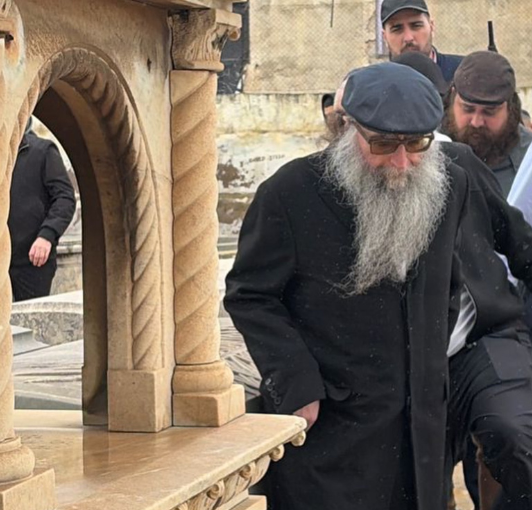
- A Teaching on Parshat Beshalach by HaAdmor Rabbi Yoshiahu Pinto Shlita (Morocco)
We find ourselves in Parshat Beshalach, a portion filled with holiness and profound lessons for every generation.
The Torah describes a moment of absolute terror. The Children of Israel, recently freed from 210 years of slavery, are trapped. The Egyptian army is pursuing them from behind, the raging sea is in front of them, and a desert filled with snakes and scorpions flanks them. They are in an impossible situation. Naturally, they turn to Moses, and Moses turns to God.
But the response from the Holy One, Blessed be He, is startling:
“Why do you cry out to Me? Speak to the people and let them move forward.”
This verse has puzzled our Sages for centuries. We are taught that Tefillah (prayer) is one of the pillars of the world. Maimonides (The Rambam) rules that when a person is in distress, it is a biblical obligation to cry out to Hashem. So, at this most critical moment, why did God seemingly reject Moses’ prayer?
The Wall of Judgment
HaAdmor Rabbi Yoshiahu Pinto Shlita explains this mystery through the holy lens of the Ohr HaChaim HaKadosh.
There are specific times when the “Attribute of Judgment” (Middat HaDin) is at its peak against a person. At the Red Sea, the Angel of Egypt stood before God and argued: “What is the difference between these two nations? The Israelites worshipped idols just as the Egyptians did. Why should one group be saved while the other drowns?”
The prosecution was strong. The Ohr HaChaim teaches that when the Attribute of Judgment is this powerful, prayer alone is not enough. Even if the prayer ascends, the salvation that comes down will be incomplete or obstructed because the spiritual accusation blocks it.
Action Weakens the Accuser
So, what must we do when we feel blocked?
The Rav explains that before we pray, we must perform a tangible act—a “Ma’aseh.”
“When a person performs a good deed,” Rabbi Pinto teaches, “they weaken the Attribute of Judgment. This act creates a crack in the wall of judgment, allowing the prayer to ascend with greater strength.”
God was telling Moses: “This is not the time to only pray. Do something! Show self-sacrifice (Mesirut Nefesh). Move forward!”
By taking action—whether it is an act of kindness, giving charity (Tzedakah), or overcoming one’s nature—we weaken the power of the adversary. Once the accuser is weakened, our prayers can pierce the heavens and bring down a complete salvation.
Faith vs. Trust
Rabbi Pinto concludes with a vital distinction found in Maimonides regarding our mindset during these challenges:
-
Faith (Emunah): Believing that God can save you. This is theoretical.
-
Trust (Bitachon): Being certain that salvation will happen.
To merit miracles like the splitting of the sea, we must elevate our faith to trust. We must act with certainty.
Practical Advice for Our Times
Whenever you see that judgment is prevailing against you—whether in livelihood, health, or family matters—do not rely on prayer alone.
-
Give Charity: The Sages teach to give a coin to charity before praying. This silences the accuser.
-
Do an Act of Kindness: Perform a deed that goes beyond your usual habit.
-
Then Pray: With the judgment weakened, your prayer will flow upward and bring down the Attribute of Mercy.
May we all merit to weaken the strict judgments, strengthen our trust in Hashem, and see the great light of redemption.
