
By Shuva Israel Editorial Team
In a world of fleeting trends and temporary celebrations, there is one day on the Jewish calendar that claims a startling brand of permanence. According to the Midrash, while other festivals may eventually fade into the background of history, the holiday of Purim—and the scroll of Esther that tells its tale—will remain forever.
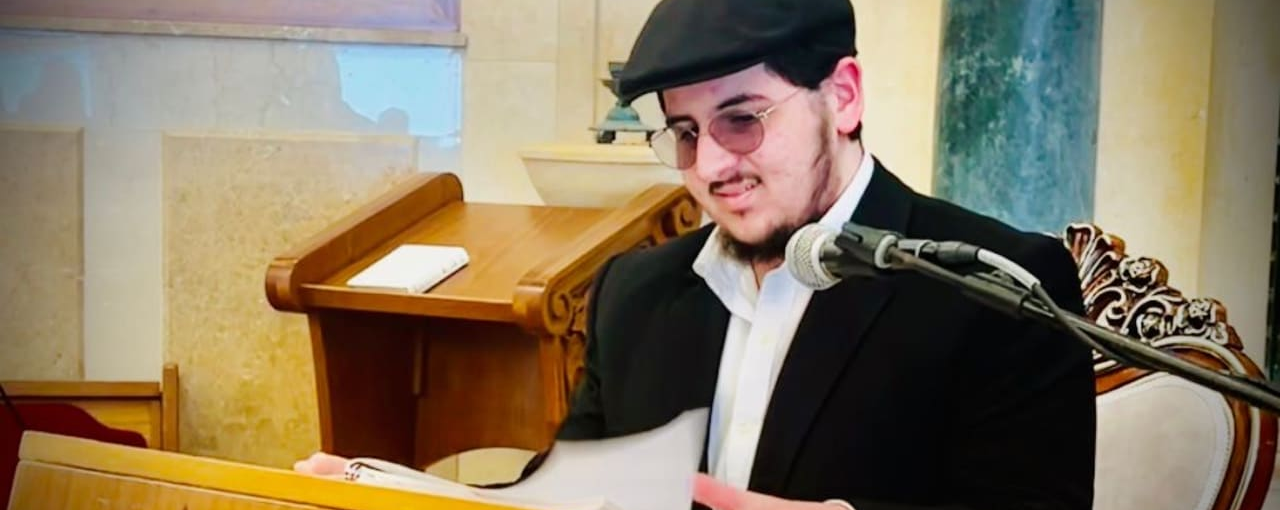
In a recent, profound shiur, Rabbi Meir Pinto explored this paradox: How did a story defined by hiddenness, political intrigue, and the absence of overt miracles become the most resilient light in the Jewish spiritual arsenal?
The Only Scroll That Stays
Rabbi Pinto began by citing the Jerusalem Talmud and the Midrash Shocher Tov, which present a radical vision of the future. They teach that in the era of ultimate redemption, the books of the Prophets and the Writings will no longer be recited—with one notable exception: Megillat Esther.
“Esther asked the sages of her time, ‘Write me for all generations,'” Rabbi Pinto explained. “She knew that her story wasn’t just a historical account of a narrow escape in Shushan; it was a blueprint for survival in the darkness of exile.”
The “Vaccine” of the Spirit
To explain why Purim is uniquely relevant today, the Rabbi turned to the mystical insights of the Ari Zal (Rabbi Isaac Luria). Every Jewish holiday, the Ari teaches, is not merely a commemoration of the past but a re-emergence of a specific spiritual “light.” On Passover, we re-experience the light of freedom; on Shavuot, the light of Revelation.
However, Purim operates differently. Rabbi Pinto offered a strikingly modern metaphor to explain its function: the vaccine.
“In the original Purim story, Haman was the virus—a deadly threat that sought to destroy the body and soul of the nation,” the Rabbi noted. “Mordechai and Esther brought the cure. But for us, in every generation that followed, Purim became the vaccine. We don’t wait for the ‘virus’ of Amalek to strike; we take the light of Purim annually as a preventative measure. We infuse ourselves with the certainty of God’s presence before the darkness descends, neutralizing the threat before it can take root.”
God in the Details
The name Esther shares a root with the Hebrew word hester, meaning “hidden.” Unlike the Splitting of the Sea or the Manna from Heaven, the miracles of Purim were cloaked in the “natural” world—a series of “coincidences,” a sleepless king, a well-timed banquet.
Rabbi Pinto emphasized that this is precisely why Purim is the holiday of the modern era. We live in an age where God’s hand is not always visible in the headlines.
“Purim teaches us to find the Divine in the ‘wine parties’ and the political maneuvers,” the Rabbi said. “It is the ability to see that even when the King’s name isn’t mentioned once in the Megillah, He is the one pulling every string.”
From Shushan to the Modern Redemption
Drawing a line from the end of the Babylonian exile to our current day, Rabbi Pinto connected the Megillah to the building of the Second Temple. The story of Esther took place at a low point in Jewish history—a time of confusion and stalled progress. Yet, it was precisely through that “hidden” miracle that the path to Jerusalem was reopened.
Quoting the Vilna Gaon, the Rabbi spoke of two types of redemption: Be’itah (in its time) and Achishena (hastened). While we pray for a sudden, miraculous end to our troubles, Purim represents the slow, steady, and often quiet process of God bringing His children home.
“We see it today,” Rabbi Pinto concluded. “The ingathering of exiles, the flourishing of Torah in the Holy Land—it is a ‘Purim-style’ redemption. It happens through the natural course of history, but for those with eyes to see, it is the greatest miracle of all.”
A Message for Shuva Israel
As the Shuva Israel community prepares for the upcoming holiday, Rabbi Pinto’s message is clear: Purim is not just a day of costumes and festivities. It is a day to “unmask” the reality of our lives and recognize that the Almighty is present in the smallest details of our daily struggles.
By tapping into the eternal light of Esther, we don’t just celebrate a victory from 2,500 years ago—we arm ourselves with the faith needed to navigate the challenges of today.
For more insights and to view the full shiur by Rabbi Meir Pinto, visit our video library at Shuva Israel.
