
In a world of fleeting trends and temporary celebrations, there is one day on the Jewish calendar that claims a startling brand of permanence. According to the Midrash, while other festivals may eventually fade into the background of history, the holiday of Purim—and the scroll of Esther that tells its tale—will remain forever.
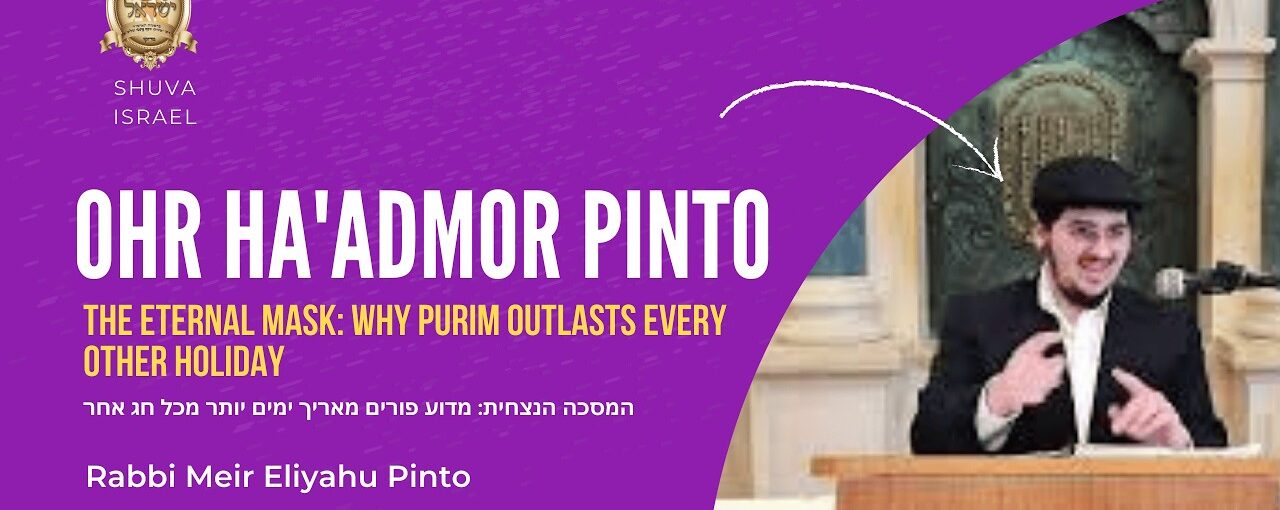
In a recent, profound shiur, Rabbi Meir Pinto explored this paradox: How did a story defined by hiddenness, political intrigue, and the absence of overt miracles become the most resilient light in the Jewish spiritual arsenal?
The Only Scroll That Stays
Rabbi Pinto began by citing the Jerusalem Talmud and the Midrash Shocher Tov, which present a radical vision of the future. They teach that in the era of ultimate redemption, the books of the Prophets and the Writings will no longer be recited—with one notable exception: Megillat Esther.
“Esther asked the sages of her time, ‘Write me for all generations,'” Rabbi Pinto explained. “She knew that her story wasn’t just a historical account of a narrow escape in Shushan; it was a blueprint for survival in the darkness of exile.”
