By Shuva Israel editorial team
26 March, 2026
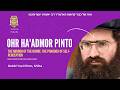
LOS ANGELES — In a sun-drenched hall in Los Angeles this morning, the air was thick not with the scent of the coming spring, but with the weight of memory and the anticipation of the Seder night. Rabbi Yoshiyahu Pinto, the revered spiritual leader whose influence spans continents, sat before a hushed crowd to deliver a pre-Passover shiur that moved seamlessly from the horrors of the Holocaust to the esoteric laws of the human mind.
The Rabbi’s message was clear: Passover is more than a historical commemoration; it is a nutritional requirement for the soul.
The Diet of the Spirit
“Just as the body requires food and a tree requires water, the soul has its own unique sustenance,” Rabbi Pinto began. He argued that while the physical body is maintained through mundane consumption, the soul—the neshama—withers without the “deep secrets” and “inner dimensions” of the Torah. This spiritual nourishment, he suggested, is the only thing capable of sustaining a person through the darkest of times.
To illustrate this, the Rabbi recounted a harrowing and ultimately miraculous story from the depths of the Holocaust. He spoke of a great Admor (Chassidic leader) who, even in the middle of the “extermination camps,” refused to let a single blade touch his beard, risking death at the hands of German guards who demanded all prisoners be clean-shaven.
For months leading up to Passover, this Rabbi and his followers painstakingly collected crumbs of flour, hiding them in the mud and the shadows. On the eve of the holiday, they managed to bake three small pieces of Matzah. Their efforts were nearly thwarted when a camp commander discovered them, destroyed their makeshift oven, and brutally beat the group. Yet, the Admor managed to save one jagged fragment of the “bread of affliction.”
The Essence of the Night: ‘And You Shall Tell Your Son’
The climax of the story arrived at the Seder table—a table of planks and misery. As the Admor prepared to eat the final piece of Matzah, a widow approached him with a 12-year-old boy. She demanded that her son, not the Rabbi, be the one to eat the Matzah and recite the blessing.
When the stunned onlookers questioned her “chutzpah,” she offered a profound theological defense: “What is the whole essence of the Seder night? V’higadeta l’vincha—And you shall tell your son. The continuity of the Jewish people depends on the next generation understanding the miracles of Egypt. You, Rabbi, already know. He must learn.”
Moved to tears, the Admor conceded. Decades later, in a twist of fate that the Rabbi attributed to divine providence, the Admor and that widow met again as refugees in Brooklyn. They married, and the young boy grew up to become a great Admor himself, continuing the lineage that had almost been extinguished in the camps.
The Gravity of Thought
Shifting from the historical to the psychological, Rabbi Pinto concluded his teaching with a warning about the power of the internal world. Drawing on the writings of the Ben Ish Chai, he shared a parable of a king who judged a man not for his actions, but for his dreams.
The moral was a sobering one for the modern age: “God brings everything into judgment—even a thought. If a person thinks bad, they will receive bad thoughts and fears in return.”
As the Jewish world prepares to scrub their homes of physical leaven (chametz), Rabbi Pinto urged his followers to perform an even deeper cleaning of the mind. In the Rabbi’s view, the true freedom of Passover begins in the silence of one’s own thoughts, where the seeds of future actions—and future miracles—are sown.
Rabbi Yoshiyahu Pinto is currently in Los Angeles delivering a series of lectures ahead of the Passover holiday. His teachings continue to emphasize the connection between traditional Chassidic thought and the challenges of the 21st century.