
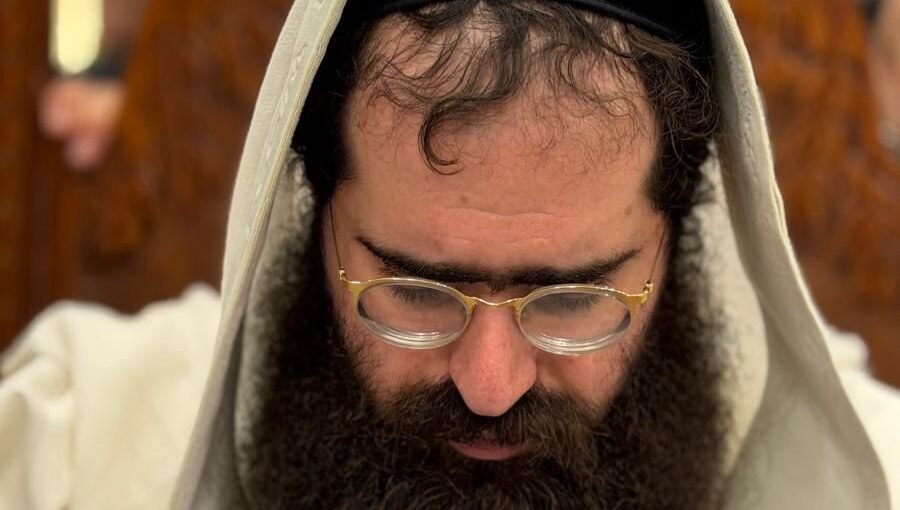
Published: July 26, 2026 | Teacher: Rabbi Yoel Moshe Raphael Pinto, Shlita
Overview & Quick Insights
- Devarim & Transformation: The Book of Devarim (Deuteronomy), known as Mishneh Torah, contains the power of Shinui (transformation) to alter a person’s spiritual destiny and sweeten harsh decrees.
- The Core Condition for Redemption: According to Hosea and the Zohar, redemption cannot manifest until the Jewish people actively seek and balance two kingdoms: the Malkhut (Kingship) of God and the Malkhut of King David.
- Halachic Wisdom of Wedding Exemptions: A groom is exempt from reciting the Shema on his wedding night because the Sages sought to relieve his existential anxiety, letting him lean entirely on Davidic trust (surrender to God) rather than the heavy yoke of personal pressure.
- Esau’s Merit & the Temple’s Demise: Esau’s pristine performance of Kibbud Av va’Em (honoring parents) for his father Isaac—who was 60 when Esau was born—created the spiritual merit that enabled his descendants (Rome/Edom) to destroy the Holy Temple, which stood 60 cubits high.
- Kabbalistic Root of Rava’s Soul: The Arizal reveals that the soul of the Talmudic sage Rava was hidden within Lot (Abraham’s nephew). Because Rava’s soul was birthed through the pure intentions (Lishmah) of Lot’s daughters, Rava spent his life emphasizing that Torah study is only viable when performed with pure Lishmah.
In Jewish theological study, the transition from Tisha B’Av—the day mourning the loss of the physical Temple—to the comfort of the subsequent Sabbaths requires a profound shift in consciousness. During a memorial gathering held on the evening following Tisha B’Av, commemorating the yahrzeit of the venerable grandmother who left Spain to establish the saintly Abuhatzeira rabbinic dynasty in Morocco, Rabbi Yoel Moshe Raphael Pinto, Shlita, delivered a comprehensive lecture. This discourse weaves together the halachic rules of prayer, the prophetic conditions for ultimate redemption, and the esoteric Kabbalistic secrets of soul reincarnation.
The Prophetic Blueprint: The Twin Pillars of Redemption
We often pray passively for the arrival of the Messiah to alleviate human suffering. However, authentic redemption is dependent on a strict spiritual condition established by the Creator. As the Prophet Hosea states:
“Afterward shall the children of Israel return, and seek the Lord their God, and David their king; and shall fear the Lord and His goodness in the latter days.” (Hosea 3:5)
The Zohar (Parashat Terumah) confirms that this is an absolute condition: the redemption cannot unfold until the children of Israel actively recognize the necessity of both the Sovereignty of God and the Sovereignty of the House of David. Historically, the first division of the Jewish nation occurred when the ten tribes seceded from Rehoboam (Solomon’s son), declaring, “What portion have we in David?” This initial rebellion against Davidic kingship initiated the chain of events that culminated in the destruction of the Temple and our ongoing exile.
To bring about the final redemption, we must understand the precise theological definitions of these two kingdoms, which represent two opposing but complementary paths of spiritual awareness.
1. Davidic Kingship (Malkhut Beit David)
Davidic Kingship represents the ultimate level of self-abnegation and humility. As defined by the Degel Machaneh Ephraim (the great-grandson of the Baal Shem Tov) in his commentary on Parashat Va’etchanan, this kingship is the absolute awareness that every single occurrence, no matter how small, comes entirely from the Creator. Under this awareness:
- A person realizes they have no independent power, wisdom, or merit.
- One views oneself as nothing, mirroring King David’s famous declaration in Psalms: “But I am a worm, and no man.”
- This complete negation of self-importance is the true root of repentance (Teshuvah). When a person declares with absolute certainty that there is nothing besides God (Ein Od Milvado), even their intentional sins are restructured as deeds of merit.
2. Divine Kingship (Malkhut Shamayim)
Divine Kingship represents our conscious acceptance of the yoke of Heaven and the heavy burden of personal responsibility. It is characterized by the daily recitation of the Shema (Hear, O Israel, the Lord is our God, the Lord is One). Recognizing God’s kingship means:
- Recognizing that we are under divine authority and bound by commandments.
- Acknowledging our free will and understanding that our choices have immense spiritual consequences.
- Experiencing the fear of sin (Yirat Chet)—the anxiety of making a mistake, causing spiritual damage, or failing to live up to our obligations.
| Aspect of Sovereignty | Spiritual Definition | Primary Mitzvah / Paradigm | Internal Psychological State |
|---|---|---|---|
| Davidic Kingship | Total surrender; everything is from God; man has no independent power. | The path of Teshuvah (Repentance); complete humility. | Total trust, peace of mind, absence of personal anxiety. |
| Divine Kingship | Acceptance of command; man has free will and full responsibility. | Recitation of the Shema Yisrael; fulfilling mitzvot. | Awe, fear of transgression, acute mindfulness of actions. |
The path to ultimate redemption lies in achieving a perfect balance between these two perspectives. A person must know that every occurrence is divinely ordained, yet remain highly vigilant over their personal actions and decisions, recognizing that their choices carry immense consequences.
Why a Groom is Exempt from Reciting the Shema
This dynamic between Davidic trust and Divine responsibility explains a classic halachic ruling found in the Mishnah (Berakhot, Chapter 2): A groom is exempt from reciting the Shema on his wedding night.
While the groom is fully permitted to participate in the wedding feast, dance, and converse with guests, he is entirely excused from reciting the Shema. The Sages explain that on his wedding night, as he begins to build his own home, the groom is entering a major life transition. For the first time, he is leaving the shelter of his parents and assuming the heavy burden of providing for a household.
This transition naturally brings immense pressure and anxiety. The *Shema* represents the Sovereignty of God—the weight of personal responsibility and the fear of failure. If the groom were required to recite the *Shema* under such emotional distress, his anxiety would overwhelm him.
Therefore, the Sages temporarily lift the yoke of Divine Kingship on this night. They leave him exclusively with the comfort of Davidic Kingship: the soothing reminder that everything is in the hands of the Creator, who arranges matches, provides sustenance, and protects our paths. This temporary suspension of obligation prioritizes human peace of mind and trust over personal performance.
Esau’s Merit: The Spiritual Force Behind the Temple’s Destruction
A persistent historical problem in Jewish theology is how Rome—the physical and spiritual descendants of Esau and Edom—acquired the spiritual license to destroy the Holy Temple. Rabbi Yoel Pinto, Shlita, presents a classic Kabbalistic solution based on the commentary of the Ba’al HaTurim regarding the immense power of Kibbud Av va’Em (honoring parents).
Our father Isaac was 60 years old when Esau was born. Despite his wicked lifestyle, Esau fulfilled the mitzvah of honoring his father with unprecedented dedication. He would famously change into his finest, most royal garments simply to serve his father his meals.
The first Holy Temple stood at a height of exactly 60 cubits. The Sages explain that because Esau honored his father—who was born when Isaac was 60—with such flawless dedication, he created a massive, long-lasting spiritual shield. This specific merit of Kibbud Av granted Esau’s descendants (Edom and Rome) the spiritual power to destroy the Temple, which shared that same numerical dimension of 60 cubits.
blockquote>
“Esau’s flawless dedication to his father created a spiritual force so great that its energy could only be offset by the destruction of a 60-cubit-high Temple. This teaches us that the spiritual impact of honoring parents is virtually indestructible, even when performed by the wicked.”
The Complex Psychology of Jewish Family Dynamics
This principle explains why honoring parents can often feel like a complex, emotionally charged struggle within Jewish families, whereas other cultures may seem to find it simpler.
In many societies, children passively accept their family traits, blending seamlessly into ancestral behaviors. However, a Jewish soul is bound by the constant pursuit of character refinement and spiritual correction (Tikkun HaMiddot). When a person works to identify and eliminate negative traits, habits, or coping mechanisms within themselves, they naturally encounter friction with the parents from whom those traits were inherited. This psychological tension is not a failure of respect; rather, it is a byproduct of the soul’s active work to refine its lineage.
The Kabbalistic Secret of Rava’s Soul and the Principle of Lishmah
The climax of the discourse centers on a revelation from the Arizal (found in his commentary on Parashat Lech Lecha) regarding the soul-root of the great Talmudic sage, Rava. The Arizal explains that Rava’s soul was originally held captive within the spiritual “shells” (klipot) of Lot, Abraham’s nephew.
This connection is hidden in the biblical verse describing Abraham’s pursuit to rescue his nephew from the four kings:
“And he brought back all the goods, and also brought back Rekhusho, Ben Akhi Avraham…” (Genesis 14:16)
The first letters of the Hebrew words Rekhusho, Ben, Akhi (Reish, Beit, Aleph) spell the name **Rava** (רבא). Abraham risked his life to fight the kings because he knew that the spark of this great Talmudic soul was trapped inside Lot and needed to be rescued.
Following the destruction of Sodom, Lot’s daughters believed the entire world had been destroyed. To preserve humanity, they chose to conceive children from their father. While this act appeared forbidden and disgraceful, our sages teach that their intentions were entirely pure—motivated solely Lishmah, for the sake of Heaven. Because of this pure intention, their act was deemed holy, and it served as the channel through which Rava’s soul could eventually emerge into the world.
Why Rava Insisted on Torah Lishmah
This soul-root explains Rava’s unique spiritual philosophy, as recorded in Tractate Berakhot (17a):
- His Daily Prayer: Rava would pray every day: “My God, before I was created I was unworthy, and now it is as if I were not created. I am dust in life…” He was referring to his soul’s origins. Before his creation, his soul was trapped with Lot in Sodom. By declaring, “I am dust,” Rava aligned his spiritual lineage with Abraham—who famously declared, “I am but dust and ashes”—rejecting his ancestral connection to Lot.
- His Focus on Torah Lishmah: Rava constantly taught that Torah study must be performed with pure intentions (Lishmah), warning that if one studies for personal honor or material gain, “it would have been better had he not been created.” Because Rava’s soul was birthed through an act that was only validated because it was done Lishmah, he knew that pure intention is the absolute boundary between holiness and the outer shells.
Shabbat: The Sanctuary Unaltered by Exile
While we strive to rectify our character and study Torah with pure intent, we must also recognize the sanctuaries of comfort that the Creator has embedded in our world. Following the destruction of the Temple, the quality of our spiritual lives declined—with one exception: the Holy Shabbat.
While other holy observances depend on human sanctification or the spiritual merits of the generation, Shabbat was sanctified by the Creator during the six days of Creation. Therefore, the peace and spiritual elevation of Shabbat remain completely unaltered by exile, offering us a weekly taste of redemption.
This transition from hardship to comfort is encoded in the spiritual calendar. The Shabbat before Tisha B’Av is called Shabbat Chazon (Shabbat of Vision), while the Sabbath immediately following is called Shabbat Nachamu (Shabbat of Comfort). The gematria difference between the Hebrew words Chazon (חזון) and Nachamu (נחמו) is exactly 32—which is the numerical value of the word Lev (לֵב – Heart). This teaches us that the transition from deep mourning to comfort does not depend on a physical Temple; it depends entirely on the thoughts and refinement of our own hearts.
Frequently Asked Questions
Why is a groom exempt from reciting the Shema on his wedding night?
According to the Mishnah in Berakhot, a groom is exempt because he is preoccupied with the immense pressure and anxiety of establishing a new home. The Shema represents the “yoke of Heaven” and personal responsibility, which would overwhelm him on this night. Instead, he is left with Davidic Kingship—the peaceful trust that God provides and manages all outcomes.
What is the spiritual connection between Esau’s merit and the height of the Temple?
Isaac was 60 years old when Esau was born, and Esau honored him with great devotion. This pristine performance of Kibbud Av created an intense spiritual shield for Esau’s descendants (Edom/Rome). The Temple stood at a height of 60 cubits, and Rome merited the spiritual power to destroy it specifically through Esau’s merit of honoring his father who was born when Isaac was 60.
What is the Kabbalistic origin of Rava’s soul according to the Arizal?
The Arizal reveals that Rava’s soul originated within Lot, Abraham’s nephew. This is hinted at in the Hebrew initials of the verse “Rekhusho Ben Akhi” (Genesis 14:16) which spell “Rava”. His soul was eventually redeemed through the pure intentions (Lishmah) of Lot’s daughters after the destruction of Sodom.
What is the difference between Davidic Kingship and Divine Kingship?
Davidic Kingship represents absolute surrender, humility, and the awareness that we have no independent power, which is the root of repentance. Divine Kingship represents our acceptance of the commandments, free will, personal responsibility, and the fear of sin.
