
When Certainty Becomes Destruction: The Timeless Lessons of Parashat Korach
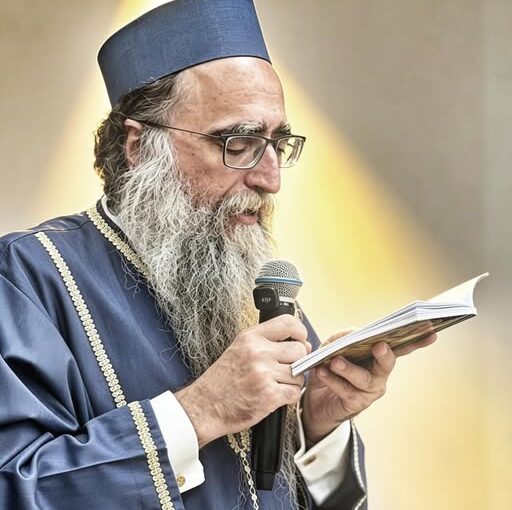
A Torah Insight from Rabbi Yoshiyahu Yosef Pinto, Shlita
There are portions of the Torah that feel distant — stories of another time, another people, another world. Parashat Korach is not one of them. Strip away the desert setting and the ancient names, and what remains is startlingly familiar: a brilliant, accomplished man consumed by wounded pride, a community fracturing along lines of ego and self-interest, and the terrifying speed with which certainty can carry a person toward complete destruction.
In this week’s shiur, Rabbi Pinto drew on some of the deepest wells of Jewish thought — the Maharal of Prague, Rabbeinu Bachaye, the Ramban, the Or HaChaim, and the secrets of Kabbalah — to illuminate not just the story of Korach, but the story of every human being who has ever let their intellect override their faith, or their pride override their wisdom.
The Desert and the Voice Beneath the Ground
Rabbi Pinto opens with one of the Talmud’s most mysterious narratives, found in Tractate Baba Batra — the travels of Rabba Bar Bar Chana. Walking through the desert accompanied by a guide, Rabba Bar Bar Chana is brought to a peculiar place in the earth and told to listen. Pressing his ear to the ground, he hears voices crying out from within: “Moses is true, his Torah is true, and we are liars.”
These are the voices of Korach and his assembly — still there, still crying out, every thirty days repeating their confession from within the earth that swallowed them.
It would be easy to dismiss this as legend or exaggeration. Rabbi Pinto reminds us that the stories of Rabba Bar Bar Chana are never simple tales. They are vessels for the deepest secrets of the Torah, and this one is no different. Because the question it raises is the question that drives the entire shiur: how does a person end up in that place? How does someone as great as Korach end up crying out from beneath the earth, confessing that the very man he opposed was right all along?
The Maharal of Prague: Why Two Is Never Enough
Before arriving at Korach himself, Rabbi Pinto shares a breathtaking geometric insight from the Maharal of Prague that reframes the entire episode.
Take any two points and draw a line between them. That line is open. It has two ends that go nowhere. It cannot be closed, cannot be sealed, cannot contain anything. Now add a third point, and suddenly you can form a triangle — a closed, complete shape. Four points, five points — no matter how many you add beyond two, you can always close the shape. But two, on its own, will always remain open.
The Maharal applies this not just to geometry but to all of existence. Anything built on two — any structure, any relationship, any community — that insists on remaining two, on dividing rather than uniting, carries within it an inherent incompleteness. This is why, the Maharal notes, the word “good” does not appear on the second day of Creation. Two is the number of the unfinished, the unsealed, the open wound.
And this, says the Maharal, is precisely what Korach attempted. He tried to split the Jewish people into two camps. He tried to introduce a fundamental duality into a nation whose entire spiritual purpose was unity. And two, by its very nature, cannot hold blessing. It cannot be closed. It can only remain open — like a mouth crying out from beneath the earth.
Who Was Korach, Really?
It is tempting to imagine Korach as a villain — a jealous, small-minded troublemaker who got what he deserved. Rabbi Pinto will not allow us that comfort.
Korach was Moses’s cousin. He was one of the wealthiest men in the world — the Talmud places him among the richest people who ever lived. He was among those chosen to carry the Ark of the Covenant on his shoulders, a task that demanded extraordinary spiritual standing. He was a leader among his people, a man of genuine accomplishment and recognized greatness.
And the rebellion did not happen centuries after the Exodus, when memory might have faded. It happened just fourteen months after the Revelation at Sinai. Fourteen months after Korach himself stood at the foot of the mountain and witnessed what no human being had ever witnessed. Fourteen months after he saw Moses descend from the heavens carrying the Torah.
So what happened?
The Moment Faith Breaks Down
Rabbi Pinto identifies the precise fracture point with surgical clarity. Korach’s gravest claim — the one that sealed his fate — was the suggestion that not everything Moses taught came directly from God. That some of it was Moses’s own invention. That when Moses appointed his brother Aaron to the priesthood, or elevated Elitzafan to a position of leadership, these were human decisions dressed up as divine commands.
It sounds almost reasonable. Almost humble, even — who is Moses to make such appointments? Surely the whole congregation is holy.
But Rabbi Pinto explains what was really happening beneath that surface argument. Korach was introducing a fatal distinction: I will accept what comes from heaven, but I reserve the right to evaluate what comes from Moses himself. He was placing his own intellect as the judge of divine transmission. And the moment he did that, everything unraveled.
This, Rabbi Pinto teaches, is one of the most dangerous moves a human being can make. Not because questioning is wrong, but because once you establish yourself as the arbiter of what is and isn’t divine, you have effectively made yourself the authority. And no human intellect, however brilliant, is equipped for that role.
The parallel to the Sin of the Spies is exact. The spies were men of faith — until faith became inconvenient. When the land of Canaan looked overwhelming, they switched seamlessly from believers to rational analysts. Rationally speaking, we cannot win. Rationally speaking, they are stronger than us. And Rabbi Pinto asks the obvious question: rationally speaking, could slaves have escaped Egypt? Rationally speaking, could bread have fallen from the sky? You accepted all of that. Why does your rationalism only activate when faith becomes costly?
That selective faith, Rabbi Pinto warns, is not faith at all.
The Anatomy of a Destructive Dispute
At the heart of this shiur is a profound teaching on the nature of conflict — what makes a dispute holy and what makes it catastrophic.
The Mishnah in Pirkei Avot draws a sharp distinction. A dispute for the sake of heaven — like the ongoing debates between the schools of Hillel and Shammai — is characterized by humility, genuine truth-seeking, and the willingness to truly hear the other side. Beit Hillel, famously, would always teach the opinion of Beit Shammai alongside their own. They were never merely trying to win. They were trying to find truth.
Korach’s dispute had none of those qualities. And Rabbi Pinto makes a point that cuts to the bone: Korach was not really fighting Moses. Korach was fighting himself. The dispute with Moses was a costume worn by something far more personal — wounded pride over his father being passed over, resentment at appointments he felt should have gone differently, a hunger for recognition that had curdled into something destructive.
Rabbi Pinto illustrates this with a powerful parable. Two nations had been at war for years, with tens of thousands of soldiers lost. Finally, wise men on both sides agreed to settle the matter by single combat — one commander against another. In the heat of the duel, just as one man was about to deliver the killing blow, his opponent spat in his face. The man lowered his sword. “I was fighting for my country,” he said. “The moment you made it personal, I refused to kill out of hatred.”
That is the line. That is the exact boundary between a dispute that can produce something and a dispute that can only destroy. The moment it crosses into personal hatred — into he disrespected me, he insulted me, he didn’t give me what I deserve — it is no longer about truth. It is poison.
Rabbeinu Bachaye’s Haunting Question
Among the most striking moments of the shiur is Rabbi Pinto’s presentation of a question raised by Rabbeinu Bachaye, the great 13th-century scholar and student of the Ramban.
Moses, throughout the Torah, is the ultimate intercessor. After the Golden Calf — arguably the most catastrophic sin in Israel’s history — Moses stood in the breach and prayed. After the Sin of the Spies, he prayed. Again and again, when Israel stumbled, Moses turned to God on their behalf.
So why, Rabbeinu Bachaye asks with genuine anguish, did Moses not pray for Korach’s assembly? Why did he not perform another miracle, provide another sign, do something to pull them back from the edge before the earth opened beneath them?
Rabbeinu Bachaye’s conclusion is striking: this question cannot be answered through ordinary reasoning. No plain explanation fully satisfies it. Only through the wisdom of Kabbalah, he says, can it be resolved.
The Kabbalistic answer involves the doctrine of reincarnation. Korach’s assembly were not, spiritually speaking, entirely new souls. They were reincarnations of earlier generations — the Generation of the Flood, the Generation of the Dispersion, the people of Sodom — souls that had already been given multiple opportunities for correction and had squandered each one. Moses recognized that this was their final opportunity. There was nothing left to pray for. Either they would correct themselves, or they would be lost.
Abraham’s Prayer: A Deeper Reading
This Kabbalistic framework opens into one of the shiur’s most beautiful insights, drawn from the teachings of Rabbi Yoel of Satmar.
When Abraham famously bargained with God over the fate of Sodom — pleading for the city if fifty righteous people could be found, then forty-five, then forty, then thirty, then twenty, then ten — the plain reading suggests he was interceding for the Sodomites themselves. But Rabbi Yoel of Satmar offers a different reading entirely.
Abraham, he suggests, was not praying for the people of Sodom. He was praying for the Jewish people who had not yet been born. He could see, through divine inspiration, that the souls of the Sodomites were approaching their final reincarnation. If they were destroyed without one more opportunity for correction, there would be insufficient souls to stand at Sinai and receive the Torah. So Abraham’s prayer was not to save Sodom — it was to ensure those souls would have one more chance, one more lifetime, one more opportunity to choose differently.
And that is precisely why, when Moses encountered Korach’s assembly, Abraham had already prayed for them. They had already received that additional opportunity. Moses understood that his intercession was not needed — and would not have helped. The moment of final accounting had arrived.
Korach’s Fatal Calculation
There is one more dimension to Korach’s story that Rabbi Pinto explores with great depth — and it is perhaps the most universally applicable lesson of the entire shiur.
Korach, the Talmud reveals, possessed genuine prophetic vision. He could see that from his lineage would emerge one of the greatest figures in Jewish history — the prophet Samuel, whose spiritual stature the tradition places alongside Moses and Aaron themselves. Korach held this knowledge like a trump card. If Samuel was destined to emerge from his descendants, then surely his family would survive. Surely no catastrophe could completely consume them.
And he was partially right. His sons did survive. They repented at the last moment, and from them Samuel the Prophet eventually emerged.
But Korach had not accounted for that repentance. His calculation assumed an all-or-nothing outcome — either everyone survives or everyone perishes. He could not see that his sons would choose a different path than he did. And so his certainty, the very thing that gave him confidence to proceed, became the blindfold that prevented him from seeing what he was walking toward.
Rabbi Pinto draws the lesson with quiet force: Many of the calculations a person makes in life are actually to his detriment. What he thinks is correct leads him to his greatest mistakes.
We are all, in our own ways, prone to this. We calculate. We project. We convince ourselves that we can see how things will unfold. And sometimes our certainty is the most dangerous thing about us.
The Evil Inclination’s Greatest Tool
Threading through the entire shiur is a teaching about the nature of the evil inclination that is worth sitting with long after the lesson ends.
The evil inclination, Rabbi Pinto teaches, does not primarily tempt us toward dramatic sins. Its greatest tool is far more subtle: it simply keeps us busy. It fills our minds with worries, regrets, plans, resentments, and distractions — one thought chasing another, memories from twenty years ago bleeding into anxieties about next week — so that we never, for even a single moment, stop and genuinely look at our lives.
Because the moment we stop — the moment we sit in genuine stillness and ask ourselves what am I doing, where am I going, what kind of person am I becoming — the game changes. Self-examination is not just a spiritual practice. It is, in Rabbi Pinto’s framing, the evil inclination’s defeat. A person who regularly takes honest stock of his actions, his character, his relationships, and his direction is a person the evil inclination cannot easily lead astray.
The desert that Rabba Bar Bar Chana walks through at the opening of the shiur is not just a physical location. It is the space of solitude and reflection that the evil inclination most wants to keep us from ever entering.
A Final Word: Innocence Over Cleverness
Rabbi Pinto closes his shiur with a reminder that is both simple and profound.
The greatest danger on the spiritual path is not ignorance. It is the moment when a person who began their journey in innocence and devotion starts to believe they have become wise. When the questions begin to multiply. When the simple faith that once carried them starts to feel naive. When their intellect begins to crowd out the trust that brought them this far.
That is the moment, Rabbi Pinto warns, when everything built can begin to crumble.
Korach was not destroyed by weakness. He was destroyed by the conviction that he was strong enough to know better. The spies were not destroyed by cowardice. They were destroyed by the belief that their rational assessment was more reliable than the God who had split the sea before their eyes.
The antidote is not to stop thinking. It is to remember — in moments of greatness especially — where we came from, what we did not yet know, and how much larger the picture is than anything our minds can fully hold.
As Rabbi Pinto teaches: A person should always remember the days when he was small, the days when he struggled with faith and needed strengthening. Whoever forgets — the Holy One, blessed be He, reminds him. And it is not advisable for a person to have to be reminded by the Holy One, blessed be He.
This blog post is based on the Torah teachings of Rabbi Yoshiyahu Yosef Pinto, Shlita, as delivered in Episode 17 of the Shuva Israel Podcast. The podcast is a direct English translation of Rabbi Pinto’s Hebrew shiurim.
🎧 Listen to the full episode at https://shorturl.at/TW6ZT 📱 Follow Shuva Israel on Instagram, Facebook, and YouTube
