
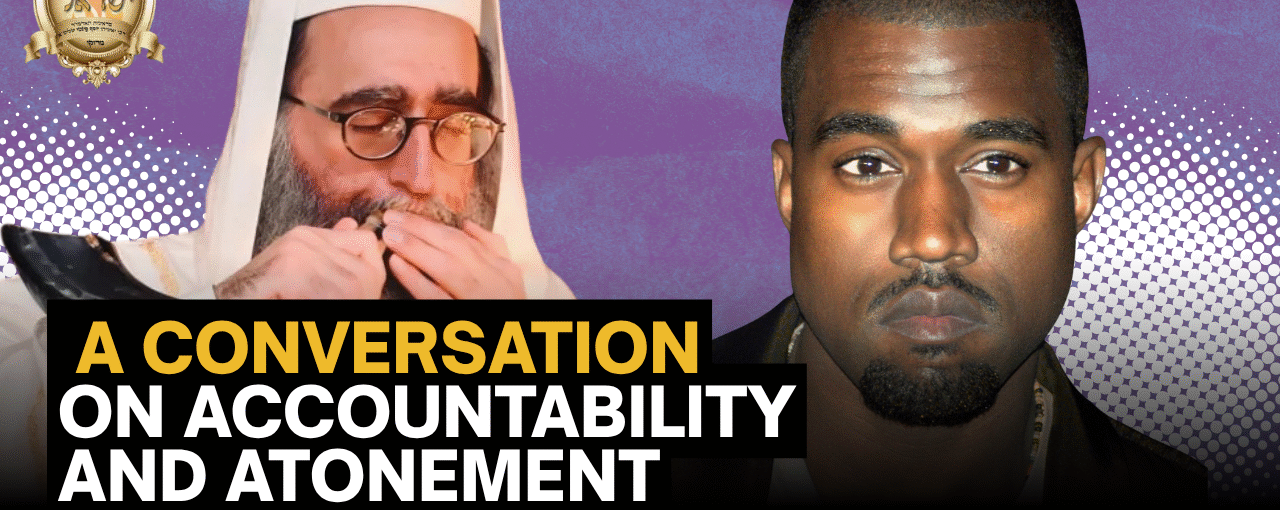
NEW YORK – In a significant and heartfelt encounter, the artist Ye, formerly known as Kanye West, met with Rabbi Yoshiyahu Yosef Pinto to express profound remorse for his past antisemitic statements. The meeting, which took place in New York, marked a pivotal moment as Ye took direct ownership of his words and began a journey of amends, grounded in the Jewish principle of Teshuvah (repentance).
During the private conversation, Ye spoke with humility and candor about his personal struggles, including his battle with bipolar disorder, and his desire to take responsibility for the pain his remarks have caused.
“I feel really blessed to be able to sit here with you today and just take accountability,” Ye stated while holding the Rabbi’s hands. He explained that his condition could sometimes take his ideas “to an extreme where I would forget about the protection of the people around me or… and myself.”
Likening his actions to those of a child who has made a mess, Ye articulated his personal responsibility to make things right. “It’s like if you left the house and you left your kid at the house and your kid went and messed up the kitchen and messed up the garage, mess up the living room,” he explained. “Now when you get back, it’s your responsibility because that’s your child… I gotta go clean up the kitchen, I gotta clean up the living room, I gotta clean up the garage.”
“It’s a big deal for me as a man to come and take accountability for all the things that I’ve said,” Ye added, emphasizing his commitment to rebuilding trust. “And I really just appreciate you embracing me with open arms and allowing me to make amends. And this is beginning in the first steps and the first, brick by brick, to build, to build back the strong wall.”
Rabbi Pinto warmly welcomed Ye and shared with him the timeless wisdom of the Torah regarding repentance and forgiveness. The Rabbi explained that the path to correction is a core value within Judaism and is available to anyone who sincerely regrets their wrongdoing.
“The Judaism brought to the world a way for someone when he regret about something that he has done wrong… he can regret and fix it,” Rabbi Pinto conveyed. He stressed that a person is not defined by their errors, but by their willingness to correct them. “A person is not defined by his mistakes, but by the way he chooses to correct them,” Rabbi Pinto stated. “This is the true strength of man: The ability to return, to learn, and to build bridges of love and peace.”
Embracing Ye, Rabbi Pinto offered words of encouragement for the future. “From now on, strong things and good things and only good. You are a very good man,” he affirmed.
The meeting concluded with a shared sense of hope, with both Ye and Rabbi Pinto expressing their desire for this dialogue to serve as an example of the power of faith, reconciliation, and the human capacity for positive change. It stands as a testament to the idea that open conversation and sincere repentance can build bridges and heal even the most painful divisions.
