
FOR IMMEDIATE RELEASE
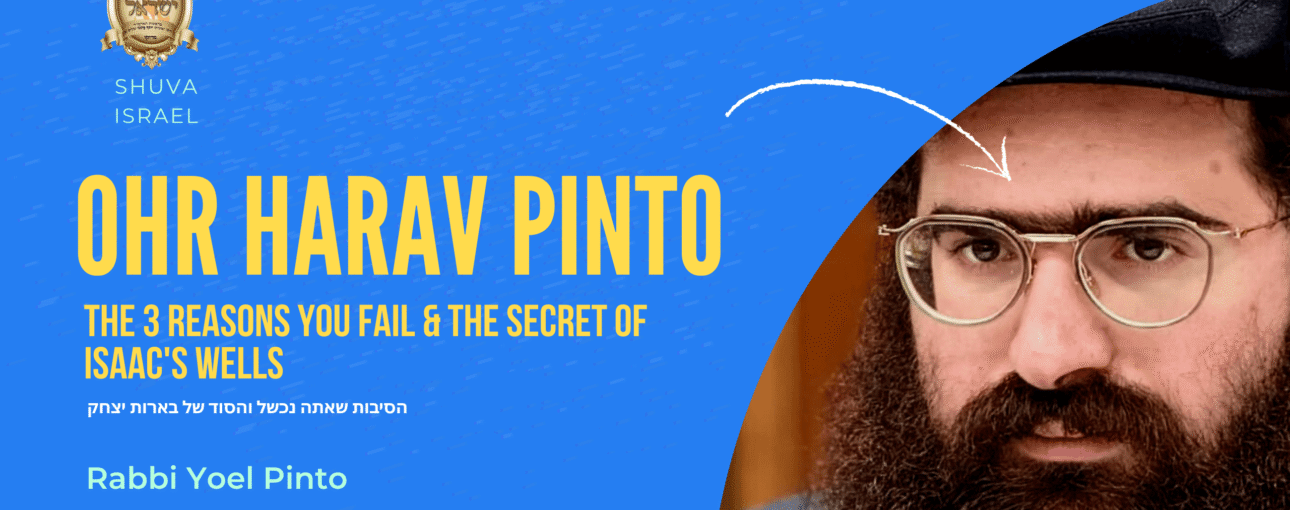
In a profound shiur, Rabbi Pinto uses the story of Yaakov and Esav to diagnose the core obstacles to success and provides a powerful antidote found in the puzzling actions of our forefather, Yitzchak.
In a recent, deeply insightful shiur that captivated a capacity congregation, the esteemed Rabbi Yoel Pinto, son of the world-renowned leader Rabbi Yoshiyahu Pinto, delivered a powerful lesson on the nature of human potential, the spiritual obstacles that prevent success, and the timeless Torah strategy to overcome them.
The shiur began by addressing a fundamental question rooted in the weekly Torah portion: How can two individuals with identical starting conditions, like the twins Yaakov and Esav, end up on such profoundly different paths?
“Esav had exactly the same starting conditions in life as Yaakov our forefather,” Rabbi Pinto explained. “The same holy father, Yitzchak; the same holy mother, Rivka. They grew up in the same womb, studied in the same house, and were educated by the same teachers. Both should have been holy and pure continuers of the path. Yet, one reached the greatest holiness, while the other was cast out to become a man of destruction.”
This paradox, Rabbi Pinto taught, is not merely a historical account but a mirror for every soul. Every Jew, he emphasized, is a child of Avraham, Yitzchak, and Yaakov, possessing an innate connection to G-d and an incredible capacity for greatness. So, what prevents us from realizing this potential?
Rabbi Pinto identified three primary spiritual plagues that cause a person to fail:
1. Laziness (Atzlut): Citing the great Ramchal, Rabbi Pinto described laziness as the fundamental trait that separates man from angel. “A person, by their nature, is lazy,” he stated. “The more a person is lazy, the closer they descend to lowliness. The more they are productive and active, they detach from the bad part of humanity and become like an angel.” This inertia is the first great barrier to fulfilling one’s mission.
2. The Fear of a Single Mistake: The second paralyzing force is the belief that one failure defines our entire journey. “Many people are stuck in their lives because once they tried something and failed, they say, ‘We cannot succeed,'” Rabbi Pinto noted. Whether a sin, a mistake in business, or a misspoken word, this mindset convinces a person that recovery is impossible and that their story is over.
3. Despising One’s Own Identity & Gifts (Bizayon): The third and most subtle poison is the contempt for what is freely given. Esav was born with the birthright—an immense spiritual gift he did nothing to earn. “Precisely the thing that a person receives as a gift, a person sees as obvious, and they despise it,” Rabbi Pinto taught. “Something a person worked for, toiled for… they are willing to sacrifice their entire life for. Something a person received in a single moment, they trample on it.”
The Antidote: The Astonishing Secret of Yitzchak’s Wells
How can a person overcome these three powerful forces? The answer, Rabbi Pinto revealed, lies in the seemingly strange actions of their father, Yitzchak Avinu, who dedicated his life to digging wells.
This was not a mere agricultural pursuit. It is a profound spiritual lesson.
“Focus on the place where you are,” Rabbi Pinto explained. “Focus on who you are. Focus on your family, your profession, the things you have. In that place, dig down, down, down, and you will find the water. Learn to remove all the layers of dirt… of difficulty… of soil, and in the exact place where you are, draw water.”
The forces of impurity, represented by the Philistines who constantly filled in the wells, fight against this principle. They encourage a person to seek their energy and solutions from external, unreliable sources:
-
The Sea (Imagination): They tell a person to live in a world of fantasy—imagining they are someone else, somewhere else, living another life. This prevents them from working on their actual reality.
-
The Rain (Waiting for Gifts): They tell a person to wait for luck, for a handout from heaven, for something to fall into their lap without effort. They wait for G-d to give, forgetting that G-d gives to those who first make the maximum effort themselves.
Yitzchak’s path is the path of holiness. It teaches that all the treasures, energy, joy, and strength a person needs are already within their own soul, buried under layers of insecurity, trauma, and difficulty. The work of life is not to look elsewhere, but to dig where you are.
This principle is the direct cure for the three plagues. It fights laziness with the demand for constant effort. It fights the fear of failure by showing that even when a well is covered, the work is to start digging again. And it fights contempt for one’s identity by teaching that the greatest treasures are found within the very ground you stand on.
Rabbi Pinto concluded with a powerful message: G-d does not expect us to complete the work alone, but He demands our sincere effort. Citing the incredible story of Yaakov holding Esav’s heel—a tiny act of striving—he explained how G-d orchestrated all of creation sixty years later to ensure that small effort was brought to its ultimate fruition.
The lesson is clear: Do not be distracted by the illusions of the sea or wait for the unpredictable rain. Take the path of Yitzchak Avinu. Acknowledge the immense potential within you, and have the courage to start digging.
